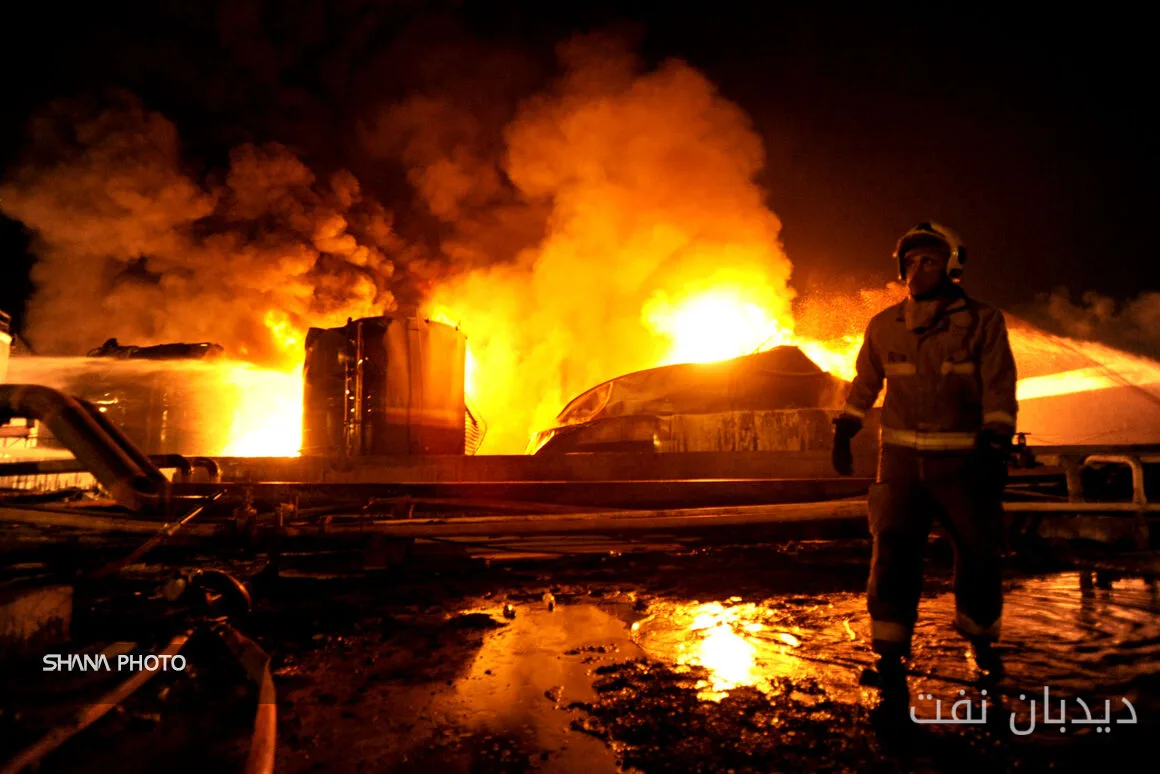
The management of the 12-day war incidents in the South Pars Energy Special Economic Zone was effectively carried out with the deployment of 600 firefighters and 1600 fire vehicles and equipment. Mehrzad Ghaibi, the HSE Chief of the South Pars Energy Special Economic Zone Organization, detailed the conditions and measures taken for incident management in a report on this incident.
Command Structure in Incident Management
In this report, Ghaibi referred to the identification and utilization of the capacities of companies over the past three years and stated: "With the aim of creating integration in incident management, a command structure has been organized according to the 54,000-hectare expanse of this area." Senior managers were appointed at six main points in the region, and a network of incident commanders and senior fire officers was established to enhance skills and coordination among companies.
Read more: Sanctioning Iranian Oil Shipment on the Way to Asia
Conducting Various Drills and Experience in Incident Management
Ghaibi also mentioned the conducting of various drills in the region and said: "These drills have helped identify weaknesses and strengths and enhance coordination among companies." He examined the experience of incident management from both psychological and managerial perspectives. In the psychological aspect, personnel faced anxiety and stress due to the war conditions, and in the managerial aspect, time pressure and the need for quick decision-making posed significant challenges.
According to the forecasts made, in the event of an incident, each designated unit was clear on how to exit service and what resources would be made available. Ghaibi explained: "This planning and coordination among companies helped manage incidents and prevented their escalation." On March 18, four Pars refineries were targeted, and on April 6, three petrochemical complexes, Damavand, Mobin, and Jam, were hit.
Equipment and Resources Used in Operations
In incident management, about 600 firefighters were deployed along with 43 fire vehicles and 83 water tankers. Ghaibi noted: "The fire water network was out of service during the incidents, and therefore securing the required water was of high importance." Additionally, heavy machinery such as loaders and other equipment were used in the operations, and over 600 tons of firefighting materials were consumed in total.
Ghaibi considered one of the most important achievements of this experience to be the strengthening of the incident command structure and the integrated use of the capacities of companies located in the area, emphasizing: "Managing and extinguishing fires in incidents caused by war conditions requires specialized skills, psychological readiness, and the ability for quick decision-making."
Read more: Army Spokesman: Iranian Order Has Dominated the Strait of Hormuz · Strategic Defeat of America and the Zionist Regime in the War Against Iran



