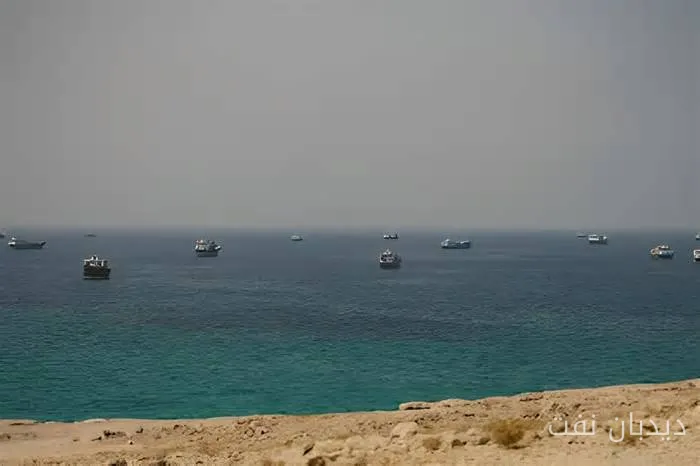
Saudi Arabia's oil exports from the Strait of Hormuz have increased again despite a sharp decline in ship traffic due to political tensions in the region. This change in export routes is a result of neutralizing the problems that arose after damage to the East-West pipeline in the country.
Marine Traffic Status
According to transportation data, about 12 cargo-carrying ships have passed through the Strait of Hormuz in the past two days; while this figure reached 35 ships last week. This decrease in ship traffic has occurred amid ongoing tensions between the United States and Iran in the Persian Gulf.
Read more: Super tanker Majestic X is on its way to Texas
Visible traffic in the Strait of Hormuz, which previously was the route for one-fifth of the world's oil and liquefied natural gas, has reached a minimum. However, oil producers in the Middle East continue their oil exports, even if the identification transmitters of tankers are turned off.
Increase in Saudi Exports
Preliminary data from the analytical company Kpler shows that on Sunday, four ships — including two tankers carrying petroleum products and two empty ships specifically for bulk and gas transport — exited the strait. Additionally, two other small tankers entered the Persian Gulf. On Saturday, five ships carrying agricultural products, liquefied gas, and chemical fertilizers also left the Persian Gulf.
Houthi attacks on Saudi Aramco's East-West pipeline have forced this state energy company to increase its exports through the Strait of Hormuz this month and next month after halting part of the shipments from the Yanbu route. This action has led to Saudi exports rising to over 4 million barrels per day in September; exports that had decreased to 2.4 million barrels per day in August.
Oil Flow Analysis
Kpler data indicates that in the week ending September 13, a total of 13 tankers — mostly supertankers carrying crude oil — exited the strait with 34 million barrels of crude oil. Half of these exports belong to Saudi Arabia, and 35 percent of it is supplied from Iraq.
JP Morgan analysts noted in a memo that despite the disruption in the East-West pipeline of Saudi Arabia, the oil flow from the Middle East has surprisingly remained strong. They pointed out that the total oil flow in the past 10 days has averaged 17.1 million barrels per day, which is only 6.1 million barrels per day less than the average for 2025.
According to analysts, the most significant shift pertains to Saudi Arabia; as satellite data shows that the amount of oil passing from this country through the Strait of Hormuz has averaged 2.9 million barrels per day over the past six days, while this figure was only 700,000 barrels per day in August.
Read more: Sanctioning of Iranian tanker shipment on November 6 · Super tanker shortages affect long-distance oil trades



