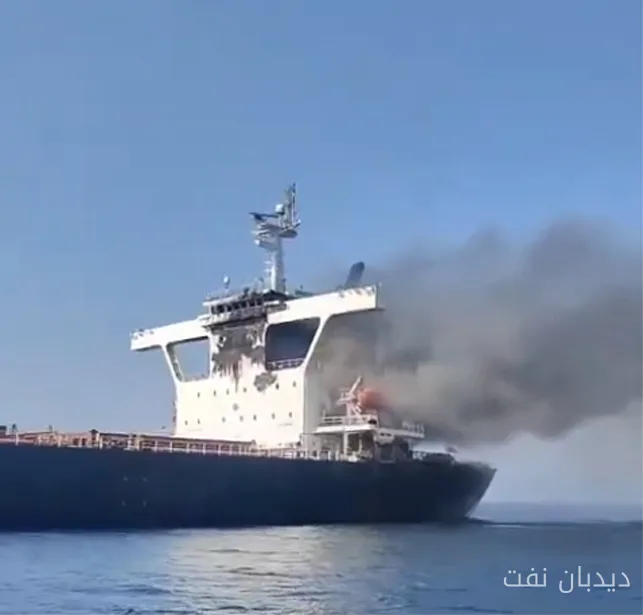
Two more oil tankers were targeted in the Strait of Hormuz, bringing the total number of attacks on oil tankers in one week to six. These attacks are clearly linked to the escalating tensions between the United States and Iran, and according to reports, 110 direct incidents related to this conflict have been recorded during this period.
Details of Recent Attacks
The oil tanker "Kazimah III," owned by the Kuwait Oil Tanker Company, was attacked while passing through the Strait of Hormuz on October 1. This incident was reported about five miles off the coast of Oman and resulted in a fire on the tanker. Additionally, on Friday, another unnamed oil tanker faced a similar fate while exiting the Strait of Hormuz. This tanker, along with the fire that occurred on it, also experienced issues due to a power outage.
Read more: DOF Group Received Multi-Million Dollar Contract for Its Submarine Vessels
Economic and Political Impacts
Attacks on oil tankers have intensified amid the fruitless negotiations between the United States and Iran on the sidelines of the United Nations General Assembly. Furthermore, American sources reported that a naval strike group and approximately 9,000 to 10,000 soldiers have been deployed to the region. These military movements could be seen as an opportunity for the United States to renew offensive operations should Donald Trump decide to do so.
Analysts believe that pressure on Iran is increasing as the country's oil revenue has significantly declined. Reports indicate that Iran has reduced its oil production and halted floating storage loading. Additionally, none of the country's large oil tankers have reached the Persian Gulf since the resumption of the blockade. Meanwhile, Iran has turned to storing crude oil in areas farther from the Persian Gulf, such as the Far East. However, analysts point out that most of these inventories have been depleted, and revenue from oil sales has drastically decreased.
According to the United States Central Command, as of September 30, 125 ships have been redirected during the enforcement of the blockade, and it has been emphasized that forces are closely monitoring the enforcement of this blockade.
Read more: Seizure of a Violating Tugboat with One Million and 825 Thousand Liters of Oil Derivatives in Bandar Abbas · Sanctions on Iran Khodro and Saipa by the U.S. Department of the Treasury



