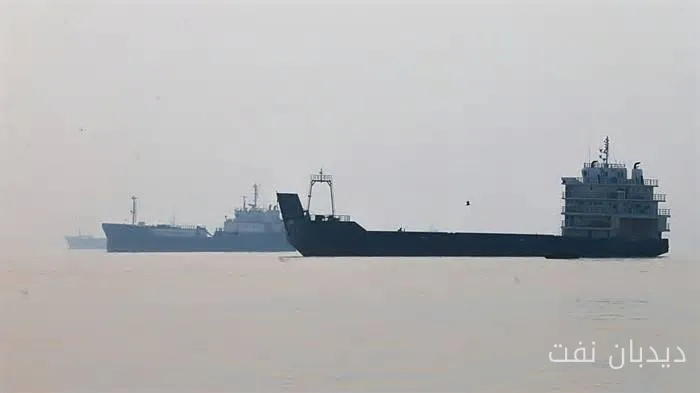
George Alhadri, CEO of HSBC Bank Group, stated at the "Future of HSBC" conference in Dubai that investment in alternative transport and energy transfer routes in the Persian Gulf may significantly reduce the need to use the Strait of Hormuz in the next five years. These remarks come in light of the world's heavy reliance on this strategic waterway following the Iran war.
The Importance of the Strait of Hormuz in Global Oil Trade
Before the onset of hostilities, the Strait of Hormuz accounted for about one-fifth of global oil and liquefied natural gas trade. The Iran war has clearly highlighted this dependency and forced Gulf countries to invest in new projects and develop energy pipeline routes to ports. Alhadri remarked, "We believe this region can be revitalized and then continue on its growth path. However, this will require substantial investments."
Read more: Mohammad Jafar Ghaempanah: Iran's Dairy Exports to Neighboring Countries Continue
Economic Predictions and the Impact of War
The CEO of HSBC pointed out that if this trend continues, the Strait of Hormuz may become practically unnecessary within five years. Meanwhile, HSBC has reported that project packages worth a total of $872 billion are planned for execution in the Middle East, North Africa, and Turkey, which are part of a larger set valued at $1.4 trillion. These projects have yet to receive their execution contracts.
Results from a recent HSBC survey of over 1,600 business managers and about 820 international institutional investors indicate that these individuals still view the Persian Gulf region as an attractive investment hub. However, World Bank forecasts suggest that the economy of the Middle East, North Africa, and Pakistan will face a severe contraction of 1.3% following a recorded growth of 3.3% in 2025 due to the ongoing war. Significant growth is expected in this economy by 2027, although this improvement will not be uniform across different countries.
In this context, the major Saudi Arabia investment conference, which was scheduled for next week, has been postponed to 2027 due to deadly Houthi attacks on Riyadh. This event is considered one of the most important investment events in Saudi Arabia, and its delay reflects the challenges facing investment in the region.
Read more: Ammer Shipping and Van de Graaf Enter New Collaboration in Belgium · Debate Over Oil Feedstock Rates: National Interests or Investment Security