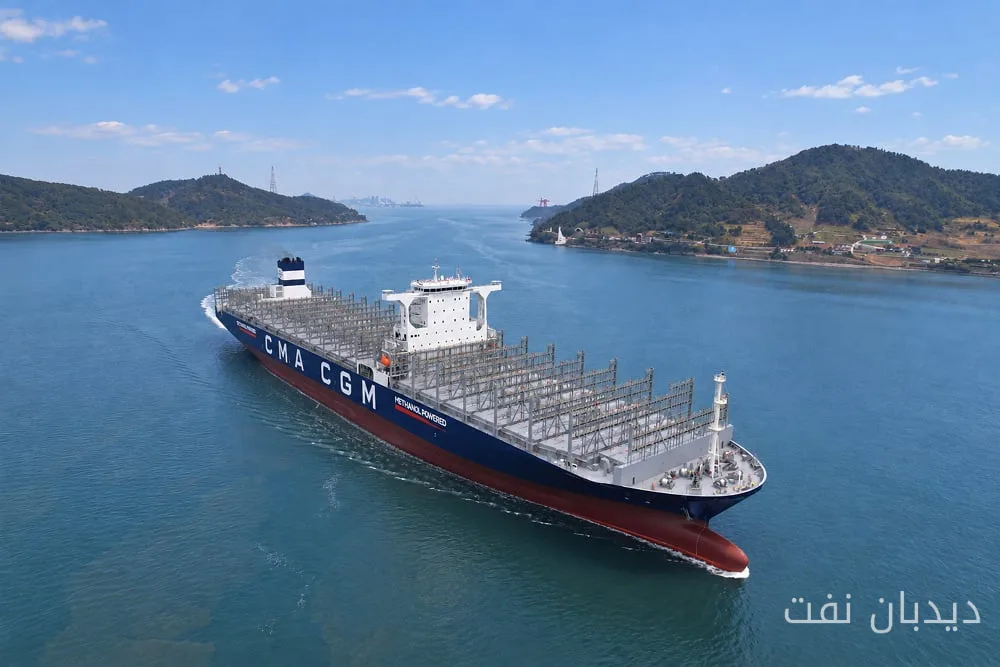
HD Hyundai Heavy Industries, the South Korean shipbuilding group, announced the delivery of its first container ship designed with a new "lashing-free" system to CMA CGM. This system has been developed to eliminate the need for manual securing of containers, thereby increasing cargo capacity and ease of cargo management.
Features of the New Container Ship
The new ship is designed with a capacity of 13,000 TEU and utilizes HD Hyundai's hybrid technology. It operates on methanol fuel and is designed to perform well even in adverse weather conditions. The new system reduces vibrations during operation and provides greater safety compared to traditional designs.
Read more: BlueNewables and Naturgy Launch 1 Megawatt Marine Solar Project in Valencia
Advantages of the Lashing-Free System
The lashing-free system eliminates the need for manual securing of containers, which is typically done by workers. This method helps prevent cargo falls and reduces environmental hazards caused by unsafe cargo. HD Hyundai has also employed a "Twistlock Rooting" system to securely hold containers in areas outside the guide zone.
This ship also has the capability to carry over 10% more cargo on deck compared to traditional ships of the same type. The new system is designed to provide excellent support for cargo even in hazardous and stormy seas, contributing to increased maritime safety and reduced risks of marine pollution.
In sea trials conducted in September, this ship demonstrated that the lashing-free system can significantly reduce vibrations. HD Hyundai has stated its intention to extend this new technology to small and medium-sized vessels and is developing a more advanced version with waterproof features.
The company has announced that it has developed the concept of this technology over the past few years and will introduce it at the tenth meeting of the International Maritime Organization's sub-committee in 2024.
Read more: HD Hyundai Delivers First Container Ship Without Lashing · Pakistan Seeks to Buy or Lease New Oil Tanker to Address Transport Challenges