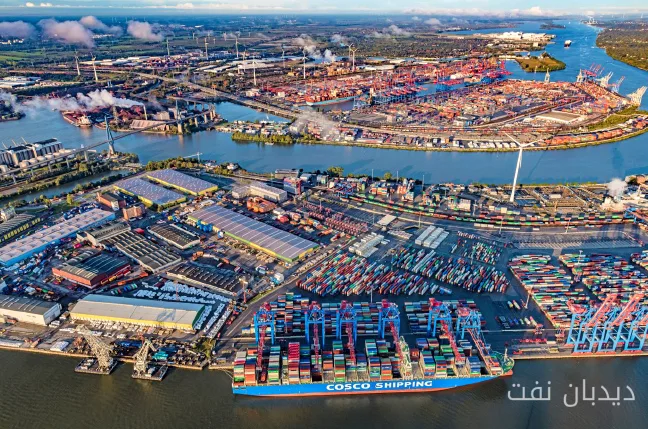
The German federal government announced its decision to block the acquisition of a domestic logistics and transport company by the Chinese group COSCO. This decision has been accompanied by rising political opposition and security concerns, indicating a shift in Germany's approach to Chinese investments.
COSCO Acquisition Details
The COSCO group announced in January 2026 its intention to acquire 80% of the shares of the German transport company Konrad Zippel. This company, which has been operating since 1876, plays a key role in transporting cargo between the Port of Hamburg and inland areas of Germany, especially in the east of the country. Zippel has a fleet of over 200 trucks and offers multimodal transport services, including rail transport.
Read more: Qatar Rejects Plans to Bypass Hormuz Strait for Gas Exports
Opposition and Security Concerns
Two CEOs of Zippel agreed to sell 80% of the company to a COSCO affiliate. One of the executives retained 20% ownership and continued in his role, while the other sold all his shares and exited the company. While the Federal Cartel Office initially approved the agreement from a competitive standpoint, further concerns regarding foreign investments were raised by the Federal Office for the Protection of the Constitution.
In September, the German Ministry of Economic Affairs, the Foreign Office, and the Ministry of Defense expressed serious concerns about the impact of this sale on supply chains and security in Germany and Europe. Zippel is recognized as a logistics provider for NATO and the German armed forces, which heightened these concerns.
On Wednesday, October 7, the German government announced that the Federal Parliament (Bundestag) had officially voted to reject this sale. The Ministry of Economic Affairs stated that this acquisition could deepen dependencies and jeopardize the resilience of supply chains in Germany and the European Union.
Germany has previously rejected only eight foreign investment agreements and typically reviews over 300 agreements each year. This decision clearly reflects the increasing scrutiny of the German government towards Chinese investments.
Read more: Global Wheat Prices Rise Due to the Ukraine War and Climate Change · Iraqi Oil Tanker Carrying 2 Million Barrels Passes Through Hormuz and Changes in Transport Patterns