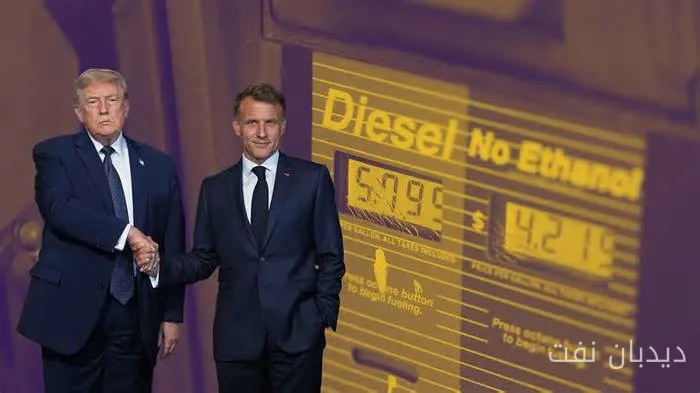
The G7 (Group of Seven) agreed on Friday to release 100 million barrels from emergency reserves of crude oil and diesel to reduce fuel prices. This decision comes after rising prices due to the war between the United States and Iran and Europe's increasing dependence on American diesel.
Details of the Reserve Release
The release will be coordinated and conducted in collaboration with the International Energy Agency and will occur gradually over four months. The G7 statement noted that the release will include a significant volume of diesel in the first 20 days. The group emphasized that there will be no restrictions on energy and energy product exports among G7 countries.
Read more: U.S. Propane Exports Reach 2 Million Barrels Per Day
The government of Donald Trump, the President of the United States, has pressured Europe to control fuel prices and warned that a lack of cooperation could lead to a ban on diesel exports from the U.S. Meanwhile, Europe is increasingly dependent on American diesel, and any restrictions could impose heavy costs on these countries.
Market Analysis and Its Implications
The release of 100 million barrels of oil and diesel could significantly impact the energy market. Specifically, if these 100 million barrels are released evenly over four months, it would be equivalent to about 830,000 barrels per day. Reports indicate that the release of 50 million barrels of diesel alone is equivalent to 17% of the total emergency reserves of diesel and heating oil in the European Union.
This action, especially ahead of winter when demand for diesel and other refined products typically increases, could help alleviate pressure on the market. Additionally, the price of U.S. diesel futures contracts fell by 3.25% to $4.49 per gallon following the announcement of the release.
The G7 also condemned Iran's attacks on regional countries in a statement and expressed its determination to restore navigation rights and principles in the Strait of Hormuz. The group also called for increased cooperation to ensure the free flow of trade through this strait.
Ultimately, this agreement could be seen as a strategic move to reduce tensions in the energy market and support European countries against rising prices. G7 member countries are striving to help lower the prices of petroleum products, especially diesel, with this action.
Read more: Alaska LNG Export Project Faces Costs More Than Double Those of Gulf Competitors · Head of Economic Security Police Reports Seizure of 16 Tankers Carrying 431,000 Liters of Smuggled Diesel in Bushehr



