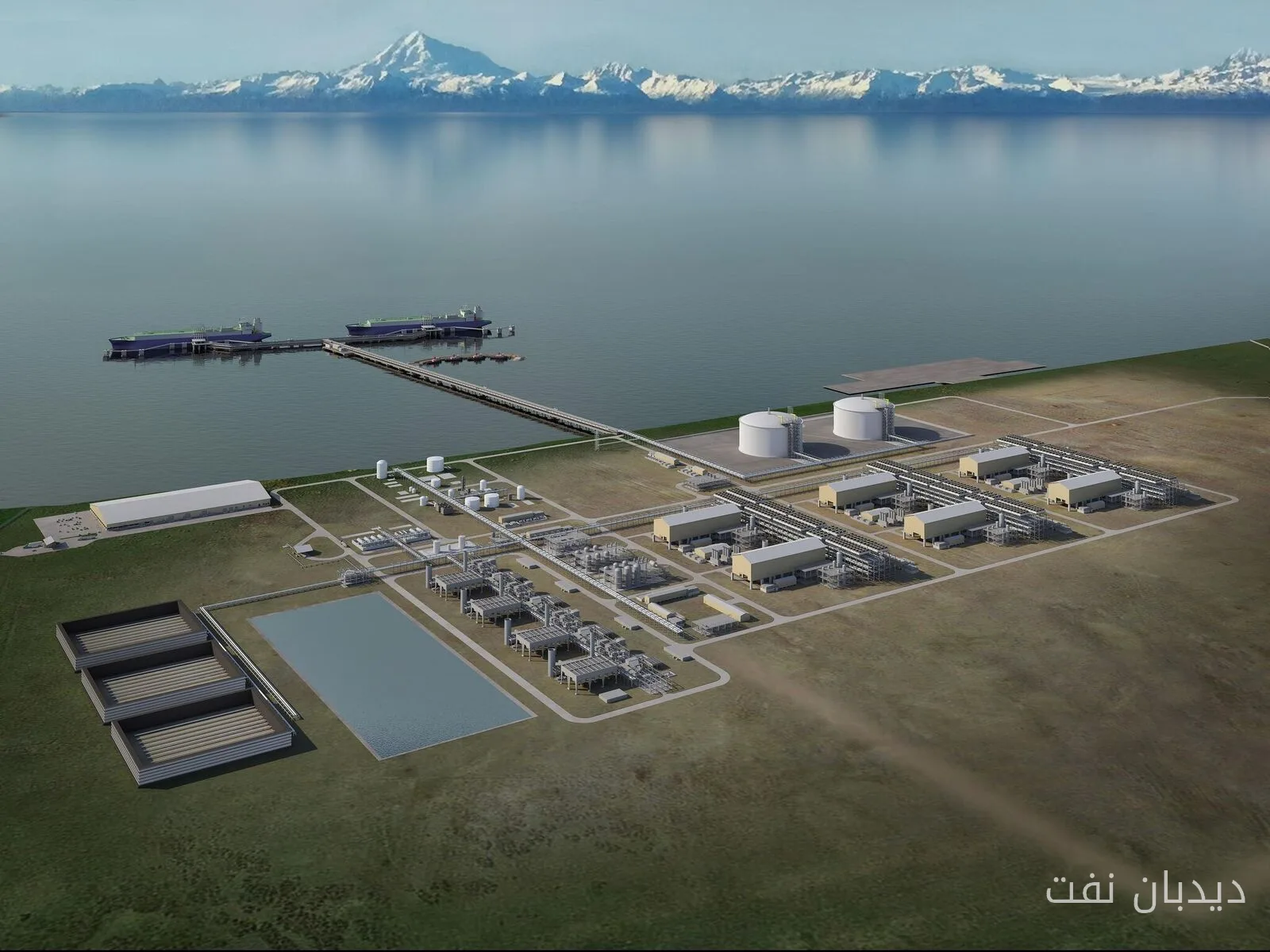
The Alaska LNG project is currently in the spotlight as a major export project. Located in Nikiski, it is capable of processing, storing, and transporting up to 20 million tons of LNG annually. However, the estimated cost of implementing this plan ranges from $44.5 billion to $54.5 billion, which is more than twice the cost of similar projects in the Gulf of Mexico.
Economic and Commercial Challenges
The U.S. government is working to direct $54 billion in investment from South Korea to the Alaska LNG project. This plan is part of a $200 billion investment package from South Korea. However, Seoul has not yet made a final decision regarding investment in this project and is currently assessing its commercial viability.
Read more: The plan to identify free fuel station cards has been implemented from today
Jason Feir, head of business information at Poten & Partners, pointed out that the main question is whether Asian buyers are willing to pay more for supply security. According to Feir, there has been no sign of this willingness so far.
Construction and Infrastructure Costs
The Alaska LNG project requires an 800-mile (1287-kilometer) pipeline from northern Alaska to Nikiski, with costs estimated between $13.2 billion and $16.9 billion. Additionally, a large processing plant in northern Alaska is needed before gas can be transported south for export. The cost of this facility is also estimated between $7.7 billion and $9.2 billion.
Ultimately, the cost of the liquefaction facilities themselves is estimated to be between $23.6 billion and $28.4 billion, resulting in a very high total cost.
Alex Manton, director of gas and LNG research at Rapidan Energy Group, stated that this project may not reach the commercial thresholds needed to attract investment. Furthermore, project supporters believe that Alaska's geographical position could provide a strategic advantage, as shipments reach key Asian importers like Japan and South Korea significantly faster than shipments from the Gulf of Mexico.
Meanwhile, some experts point to the existence of Canadian projects in the region and believe that these projects may offer more advantages than Alaska LNG.
Read more: Seizure of a violating tugboat with one million and 825 thousand liters of oil derivatives in Bandar Abbas · Kinetics converts the Arctic Voyager tanker to FSRU



