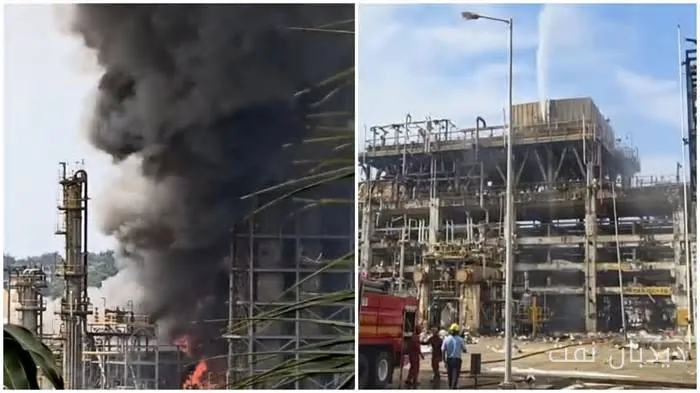
The explosion at the Coker Hydrotreater unit of the Mangalore refinery in Karnataka, India, occurred on Wednesday afternoon, resulting in the death of one worker and injuring at least eight others. The incident, caused by the rupture of a high-pressure cold separator, led to a widespread fire that lasted approximately two and a half hours. Fire teams managed to extinguish the fire after isolating the affected unit.
Details of the Incident and Its Impacts
The Mangalore refinery, owned by MRPL, has a processing capacity of about 15 million tons of crude oil per year and produces various products including diesel, gasoline, and jet fuel. This refinery is part of the state-owned Oil and Natural Gas Corporation (ONGC) and is located on the southwestern coast of India. The Coker Hydrotreater unit that was affected is responsible for processing products from the coking unit and removing sulfur and contaminants.
Read more: Gulf oil exports have returned to pre-war levels
Following this explosion, there are many uncertainties regarding the duration of the shutdown of this unit and its impact on the overall capacity of the refinery. As of the publication of this report, MRPL has not yet announced when this unit will return to operation and whether this incident will lead to a significant reduction in the overall capacity of the refinery.
Consequences for the Indian Fuel Market
This incident comes at a time when the global petroleum products market, particularly diesel, is facing supply constraints. Recent disruptions in the energy flow from the Middle East and reduced supply of certain products have increased the importance of Asian refineries in supplying the fuel market. MRPL had previously planned to operate the Mangalore refinery above 100% of its nominal capacity by March 2027, but this explosion could harm fuel supply in India.
Considering that MRPL has been affected by energy market developments this year, this incident could put additional pressure on India's petroleum product supply plans. The impact of this explosion on the market is not limited to the amount of lost capacity, and any prolonged shutdown at a large refinery could reduce the supply of products such as diesel, gasoline, and jet fuel.
Currently, there is not enough information available to determine the actual reduction in production or exports from MRPL, and the final effect of the incident depends on the duration of the shutdown of the affected unit. Given the market situation and the increasing demand for petroleum products, this incident could have significant implications for prices and fuel availability in India.
Read more: Seizure of 1.8 million liters of petroleum derivatives in the Persian Gulf by Hormozgan border guards · General Safavi: The Strait of Hormuz can be a lever of victory for Iran in the war



