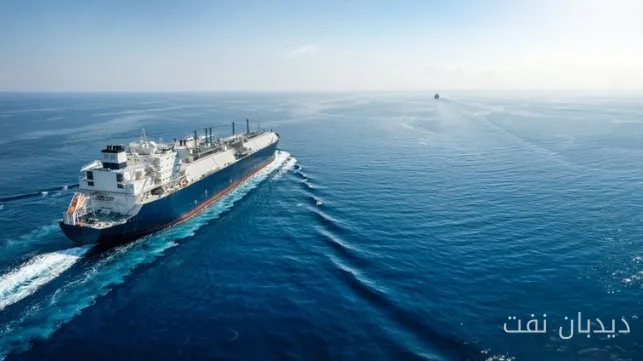
Kongsberg Maritime has recently initiated a study that investigates the capabilities of Continuous Emission Measurement System (CEMS) technology. This study is part of international efforts to minimize carbon intensity and in accordance with the International Maritime Organization's (IMO) net-zero framework.
Project Background and Objectives
In 2023, the IMO approved a program called the Energy Efficiency Existing Ship Index (EEXI) and Carbon Intensity Indicator (CII), which is considered the first step towards reducing carbon intensity in the maritime industry. In this context, Kongsberg Maritime's new project assesses greenhouse gas emission data from a new LNG vessel expected to be delivered in early 2027.
Methodology and Data Analysis
This project includes measuring the accuracy of Kongsberg Maritime's CEMS system, which uses Tunable Gas Analysis technology. Actual CO2 data recorded by the vessel's CEMS will be compared with laboratory data and default emission factors. This comparison will help evaluate the legal capabilities of direct CO2 measurement against the greenhouse gas reporting frameworks of the IMO and the European Union.
Panos Mitrou, Senior Vice President of Transport Strategy at Lloyd's Register, stated: “The industry currently relies on default emission factors and laboratory data to estimate environmental performance. This initiative provides industry stakeholders the opportunity to compare estimated emission performance against direct measurements from a vessel under real conditions.”
This study aims to generate valuable insights into the role of continuous gas emission monitoring in supporting more accurate reporting and improving operational understanding that can help reduce gas emissions.
Read more: Digital transformation in the shipping industry led by Matt Filosa · Why vegan leathers have become a dilemma in the fashion industry?