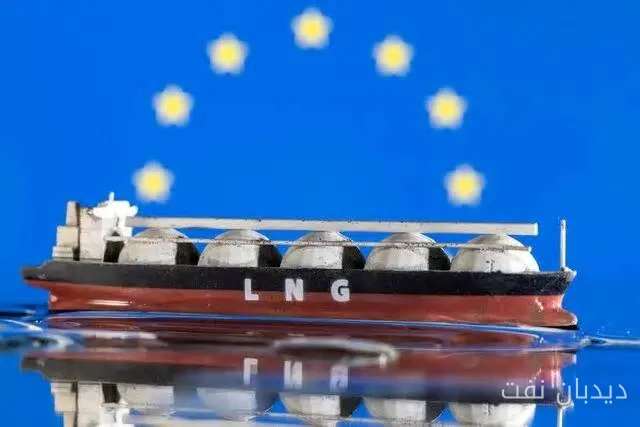
Natural gas prices in Europe have reached their highest level since the energy crisis of 2022 to 2023 due to a sharp decline in LNG shipments and uncertainty in supply from the Strait of Hormuz. This situation has arisen following the military aggression of the United States and the Israeli regime against Iran, resulting in one-fifth of the global LNG supply being trapped in this region.
Deep Price Increases
The rise in natural gas prices, coinciding with increased household energy bills and energy costs for the industrial sector, has become a serious problem for governments. The European Central Bank has raised key interest rates twice since June and indicated that further increases are likely. The bank's governing council recently stated that in the current unstable conditions, there is no commitment to a specific path for interest rates.
Read more: A.P. Moller Capital Acquires Majority Stake in Euroports
LNG Supply Situation and Its Consequences
The lack of LNG shipments from Qatar and the UAE has directly impacted prices and caused gas storage levels in Europe to drop to their lowest historical levels. According to data from "Gas Infrastructure Europe," as of September 28, gas storage facilities in the European Union were only 71% full, significantly lower than the five-year average. For example, Germany's storage facilities are only about 57% full, raising concerns about supply security for the upcoming winter.
The state-owned company "Qatar Energy" has extended the "force majeure" status for LNG deliveries until the end of November, and this status will continue for the Italian company "Edison" until early December. Despite these challenges, Germany does not appear to be facing a gas supply shortage, but prices will remain significantly higher than the levels of two years ago due to the Hormuz crisis.
The European Commission has stated that despite lower storage levels compared to historical averages, the gas supply situation in the European Union remains stable. However, economists at the European Central Bank have warned that rising wholesale natural gas prices will quickly translate to retail prices. EU governments are seeking solutions to limit energy demand to prevent future crises.
Read more: Continued Blackouts in Autumn and Promises from the Minister of Energy · Korean Companies Gazantek and Samsung Heavy Industries Sign Agreement for LNG Commercialization