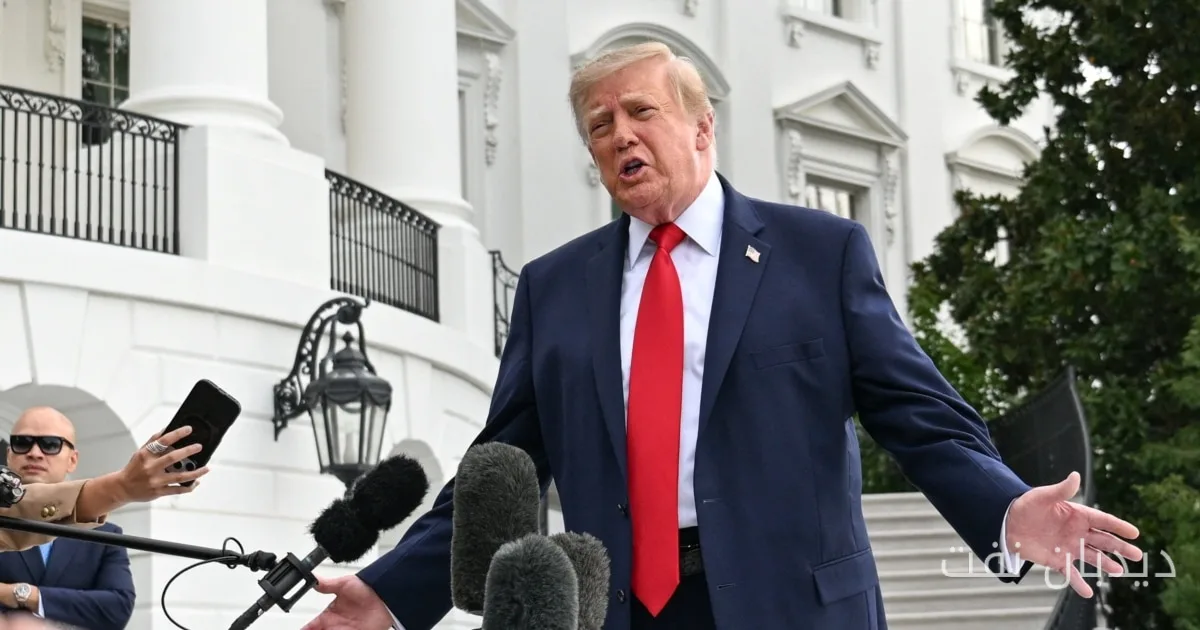
Donald Trump, the President of the United States, confirmed on Saturday, October 4, that he has rejected the Islamic Republic of Iran's proposal for the immediate reopening of the Strait of Hormuz. Trump stated in a conversation with reporters before leaving the White House: "I have rejected their proposal. They want to make a deal that would immediately reopen the strait because they are severely failing."
Control of the Strait of Hormuz and Passage of Ships
Trump continued: "We are winning powerfully. We have complete control over the Strait of Hormuz, and vast amounts of oil are flowing out of the Strait of Hormuz. Last night, 29 ships passed through the strait." He also pointed out that Iran wants to reopen the Strait of Hormuz with its proposal because it is on the verge of destruction and has no income.
Read more: Increase in Petrochemical Gas Prices to 29,749 Tomans in August 1405
Hours before Trump's statements, the Wall Street Journal reported that the President of the United States had rejected Iran's plan to open the Strait of Hormuz within seven days. Abbas Araghchi, Iran's Deputy Foreign Minister, said on Friday, October 4, in a gathering of reporters in New York that Iran had presented a "specific seven-day plan" to the United States through Qatar, and if conditions were met, the Strait of Hormuz could be reopened.
Iran's Proposal and U.S. Reaction
Iran's seven-day proposal had been previously mentioned, and Iranian officials in recent days stated that Tehran is ready to reopen the Strait of Hormuz in exchange for a cessation of hostilities, an end to the maritime blockade, the release of frozen assets, and a reduction in oil sanctions.
Trump told reporters about Iran's proposal: "They want to reopen the Strait of Hormuz immediately. Do you know why? Because they are on the verge of destruction. Do you know why they are on the verge of destruction? Because no money is coming into their country anymore. So they have outpaced themselves." He also added: "I established this blockade, and now they have no money because they wanted to close the strait."
According to reports, on Wednesday, October 1, about 60 commercial ships passed through the Strait of Hormuz, and the highest daily volume of crude oil has been transported through this waterway since early July. U.S. officials announced that about 40 of these ships coordinated with the U.S. military for their security, and in total, about 22 million barrels of oil passed through the Strait of Hormuz on Wednesday.
Shipping monitoring companies have also reported an increase in oil exports from the Strait of Hormuz in recent weeks, and the commander of U.S. military forces in the Middle East announced that in recent months, one billion barrels of oil from Gulf countries have been transported out of this waterway with the help of the U.S. military. In contrast, Iran has not exported a single barrel of oil since the maritime blockade was established.
The second round of the maritime blockade began on July 23 following the collapse of the Islamabad agreement at Trump's order. The U.S. Central Command (CENTCOM) announced on Friday that since the beginning of this round of the maritime blockade, the U.S. military has forced 122 commercial ships to change course.
Since the establishment of the ceasefire that halted the 40-day war, Iran and the U.S. have claimed to have control over the Strait of Hormuz. This waterway was previously the passage for about one-fifth of the world's oil and liquefied gas consumed in markets.
Read more: Explosion at Unit 70 of Abadan Refinery; Reduction in Gasoline Production Capacity · Iran's Gas Will Continue to Supply Energy to Armenia Until October 3, 1405



