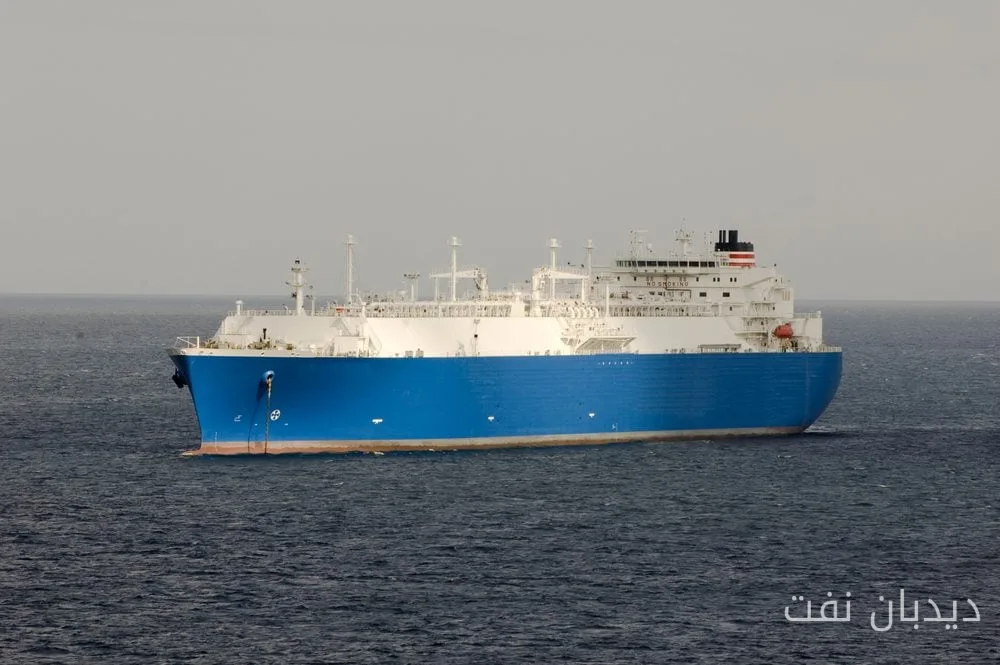
HD Hyundai Heavy Industries, along with Korean Register, BAR Technologies, and Liberian Registry, has recently signed a memorandum of understanding to study and develop WindWings technology for new generation LNG vessels. This memorandum was signed at the Gastech 2026 exhibition in Bangkok, with the aim of developing an LNG vessel with a capacity of 174,000 cubic meters that utilizes the WindWings auxiliary power system.
Details of the WindWings Project
This project assesses the technical capabilities, safety, and legal requirements for installing WindWings hard sails on LNG vessels. This technology is intended to reduce fuel consumption and greenhouse gas emissions. The design of the LNG vessel in question is such that the accommodation block is positioned forward, providing additional space for the installation of the WindWings system.
Read more: The Uncertain Future of Transport with Ground Effect: An Opportunity or a Challenge?
WindWings are designed as large hard sails that can provide auxiliary power for vessel movement, thereby reducing the need for the main engine's power. This technology helps in reducing fuel consumption and greenhouse gas emissions.
Economic Impacts and Legal Requirements
Korean Register and the Liberian International Ship & Corporate Registry will evaluate the vessel design in accordance with classification rules and international regulations. Korean Register may also provide preliminary approval based on the results of this study. Hongril Ryu, Chief Technology Officer of HD Hyundai Heavy Industries, expressed hope that this project will aid in integrating wind auxiliary power technology into the design of LNG vessels and enhance the competitiveness of new generation low-emission vessels.
John Cooper, CEO of BAR Technologies, announced that the company has so far implemented WindWings on 10 cargo and tanker vessels, using 23 sails to reduce approximately 100 tons of carbon dioxide emissions daily. This technology has recently gained more attention, and shipowners are seeking ways to reduce fuel costs and comply with stringent emission regulations.
Kyojin Yoon, Executive Vice President of Korean Register, added that this project will help determine whether this technology can be safely incorporated into the design of LNG vessels. This close collaboration between the shipbuilder, technology supplier, and flag administration will continue to develop safe and reliable innovative technologies that contribute to carbon reduction in the maritime industry.
Alfonso Castillero, CEO of Liberian Registry, emphasized that assessing this technology in the early design stages of the vessel can help translate emission reduction requirements into practical achievements in vessel efficiency and competitiveness.
Read more: Carnegie Clean Energy Seeks to Utilize Wave Testing Facilities in Oregon · Completion of Phase One of the Rescue of MSC Baltic III in Newfoundland