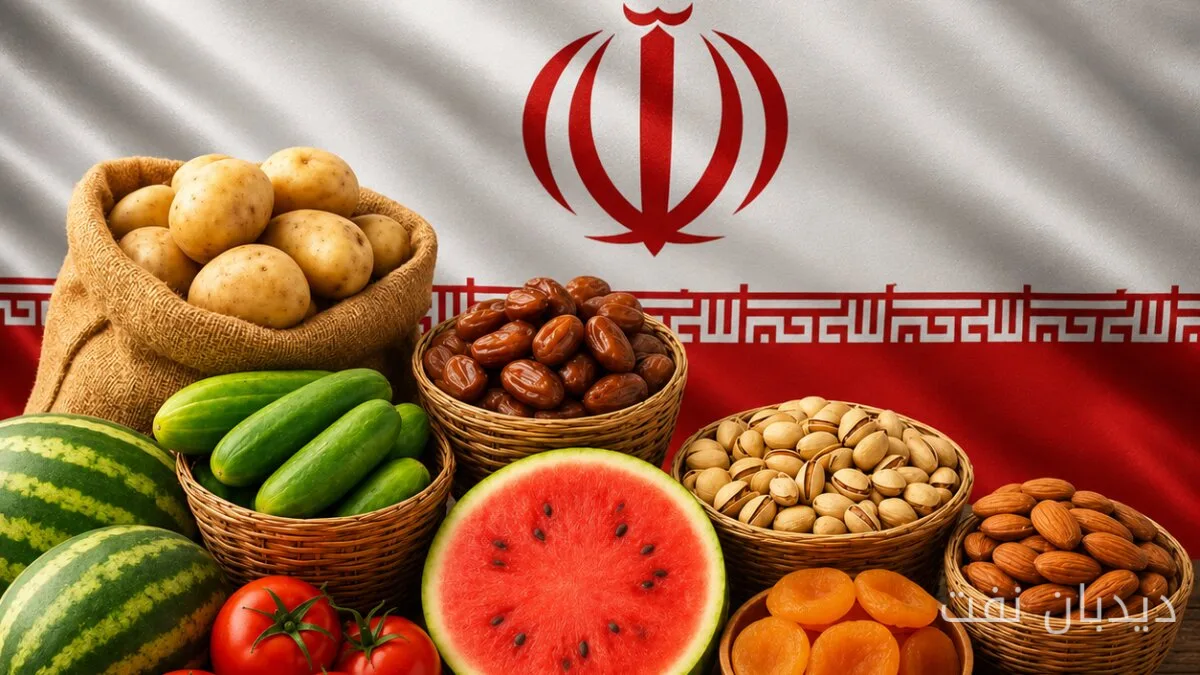
Iran's agricultural product exports reached $1.027 billion in the first three months of 2025. This amount indicates a 37% increase compared to the same period last year. Among these, Iraq, the United Arab Emirates, and Russia are recognized as the main export destinations for Iran's agricultural products.
Development of Agricultural Exports in Border Provinces
Iran's border provinces, especially Kurdistan, West Azerbaijan, and Sistan and Baluchestan, have special capacities for exporting agricultural products due to their access to the markets of neighboring countries. For example, agricultural product exports from Kurdistan reached about 464,000 tons worth nearly $191 million in the 11 months of 2024. This province, due to its border with the Kurdistan Region of Iraq, has high potential for developing agricultural product trade.
Read more: BRICS statement calls for immediate lifting of unilateral sanctions
West Azerbaijan, as one of the important horticultural hubs of the country, exported about 84,000 tons of apples abroad last year. This province also ranks first in the country in fruit concentrate production, which can increase the economic value of horticultural product exports through the development of processing industries.
Diversity of Products and Target Markets
Fars province, with its climatic diversity, has the capacity to produce a wide range of agricultural products such as pistachios, pomegranates, and saffron. These products are exported to various countries, including the United Arab Emirates and Iraq. Additionally, Sistan and Baluchestan province is recognized as one of the agricultural product export hubs due to its geographical position, exporting over 60,000 tons of products to neighboring countries in the first four months of 2025.
Khorasan Razavi province, with high value-added products such as saffron and pistachios, also has a significant share in the country's agricultural exports. This province is one of the key players in Iran's agricultural trade due to its high production and processing capacity.
Despite the publication of numerous statistics by various organizations, it is still not possible to provide a definitive ranking table of Iran's provinces based on total agricultural product exports due to differences in statistical periods and the types of products calculated. Therefore, for a more accurate assessment, we need a dataset that is contemporaneous and defined with the same statistical criteria.
Read more: Tanker War: Attack on Iranian Tanker M/T Riesco in the Sea of Oman