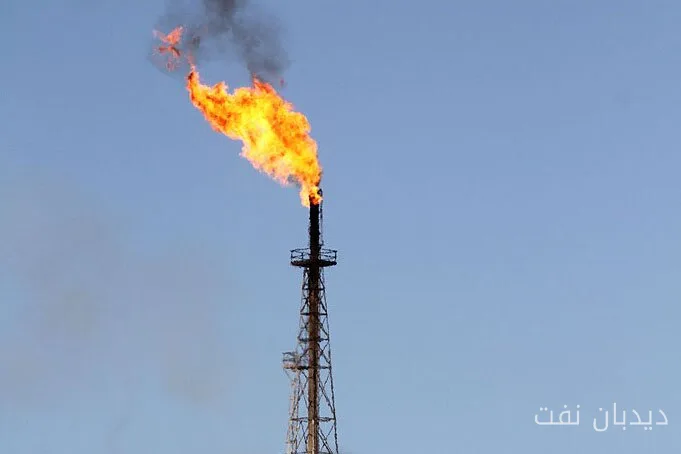
The National Iranian Oil Company is determined to collect 36 million cubic meters of flare gas by the end of 2024. The burning of associated gas from oil in onshore and offshore flares has long been one of the major structural, economic, and environmental challenges in Iran's oil industry.
These lit flares not only convert the country's vast and non-renewable hydrocarbon resources into ash and dangerous pollutants, but they also eliminate annual opportunities for billions of dollars in revenue, sustainable employment, and the provision of industrial fuel and feedstock. As the country's energy economy faces a severe deficit and daily imbalance of over 250 to 300 million cubic meters of natural gas during the cold seasons, capturing flare gas has become a vital strategic priority for energy security.
Read more: Debate over Oil Feedstock Rates: National Interests or Investment Security
Macro Dimensions and Executive Record of Flare Gas Collection Projects
According to the latest official statistics, the total volume of gas called for in 36 contractual packages has reached 730 million cubic feet per day. So far, more than 30 specialized tenders have been held, resulting in the signing of 23 contractual packages for collecting associated gases worth a total of 953 million dollars. The operational goals of this phase include the definitive shutdown of 57 active flares, attracting approved investments of over 1.1 billion dollars, and creating 1,600 direct and productive job opportunities.
During the fourteenth government’s term, a significant volume of over 330 million cubic feet of gas has been collected, and a comprehensive plan for collecting about 400 million cubic feet more has been developed and implemented for the remaining months of the year.
The Role of Onshore Fields and Offshore Projects
The geographical distribution of flare gas capture projects is concentrated in the vital oil-rich regions of the south, such as Ahvaz, Raghsafid, and Bibi Hakimeh, each pursued with specific executive packages. For example, three packages in Ahvaz with a volume of about 40 million cubic feet per day have been accompanied by the creation of the first skid by a foreign investor for the production of NGL and LPG.
In the offshore section of the Persian Gulf, projects such as the collection of gas from the Salman platform, with a capacity of 130 million cubic feet and an estimated investment of 120 million dollars, are in the finalization stage. The impact of implementing these key projects on addressing the country's gas imbalance is multidimensional and decisive.
The first effect is the daily injection of 36 million cubic meters of purified gas into the national grid during peak winter consumption, equivalent to the production of a standard phase from the South Pars fields. This clean gas is used instead of polluting liquid fuels such as mazut and diesel in power plants, which not only prevents pollution crises but also frees up billions of liters of valuable liquid fuel in the country annually.
Capturing flare gas is no longer a ceremonial option; it is considered the fastest and most cost-effective operational solution to fill the deep gap of energy imbalance and create sustainable wealth for the national economy.
Read more: Hamid Bord Strengthens Iran's Oil Production Under Sanctions · Iran Will Become the Tenth Largest Oil Exporter in the World by 2025