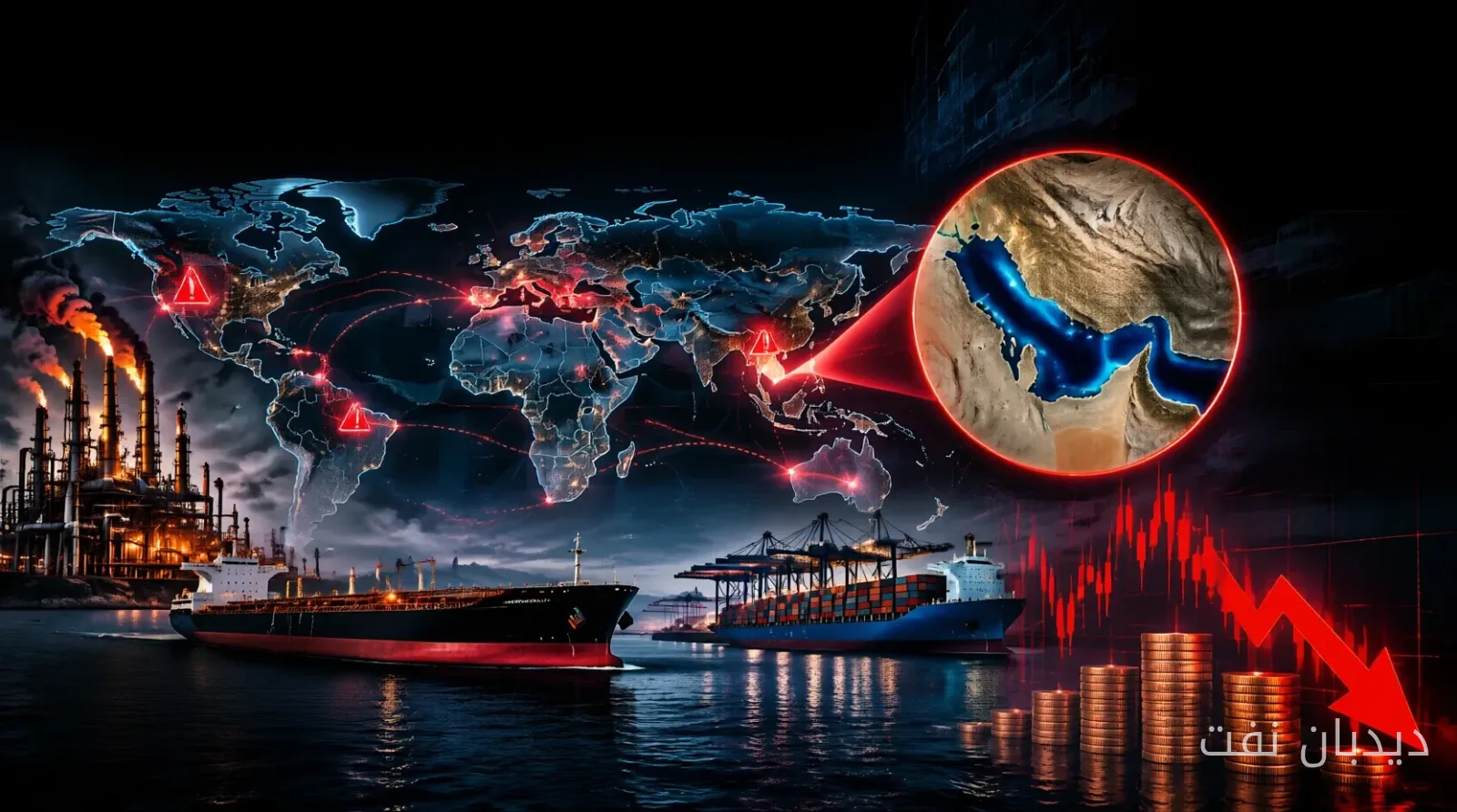
The closure of the Strait of Hormuz following the U.S. and Israel's war against Iran has been described as the largest recorded oil supply crisis in history. According to published reports, this crisis has widely impacted the global economy with increased transportation and insurance costs, high inflation, and reduced economic growth.
Economic Consequences of the Closure of the Strait of Hormuz
The International Energy Agency has predicted that global oil supply will decrease by an average of 3.9 million barrels per day by 2026, reaching 102.2 million barrels per day. This agency has also stated that it does not foresee the reopening of the Strait of Hormuz this year and has introduced the years 2026 and 2027 as a lost period for oil demand growth. Additionally, the U.S. Energy Information Administration has forecasted the price of Brent oil to average $117 per barrel in April 2026, a figure that has reached $138 in early April.
Read more: Natalia Margioli has been elected as the new president of the Maritime Institute
Rising Costs and Global Inflation
According to forecasts, inflation in the G20 countries will reach 4 percent in 2026, which is 1.2 percent higher than pre-war estimates. Furthermore, the war in Western Asia is dragging global growth to its lowest level since the COVID-19 pandemic. António Guterres, the Secretary-General of the United Nations, has indicated in his forecasts that if the Strait of Hormuz remains closed until the end of the year, global inflation will exceed 6 percent and growth will plummet to 2 percent.
Increased insurance and maritime transportation costs have also been recognized as one of the channels through which the Hormuz shock is transmitted to global trade. The war risk premium for passing through the Strait of Hormuz has risen to 3.5 to 7.5 percent of the value of the ship's hull and machinery per trip, whereas this figure was only 0.10 to 0.25 percent before the war. In some estimates, this premium has reached 10 percent and in some cases up to 12.5 percent.
Ultimately, this economic crisis represents a multi-layered and escalating shock whose consequences could impact the global economy for a long time. Given that real costs seem difficult to predict due to the intertwining of production and trade chains, forecasts suggest that returning to pre-war conditions will take months and incur heavier costs than previously imagined.
Read more: COSCO Shipping Holdings' revenue increased by 81 percent in the third quarter · The National Oil Products Distribution Company announced the collection of emergency fuel cards in Khuzestan