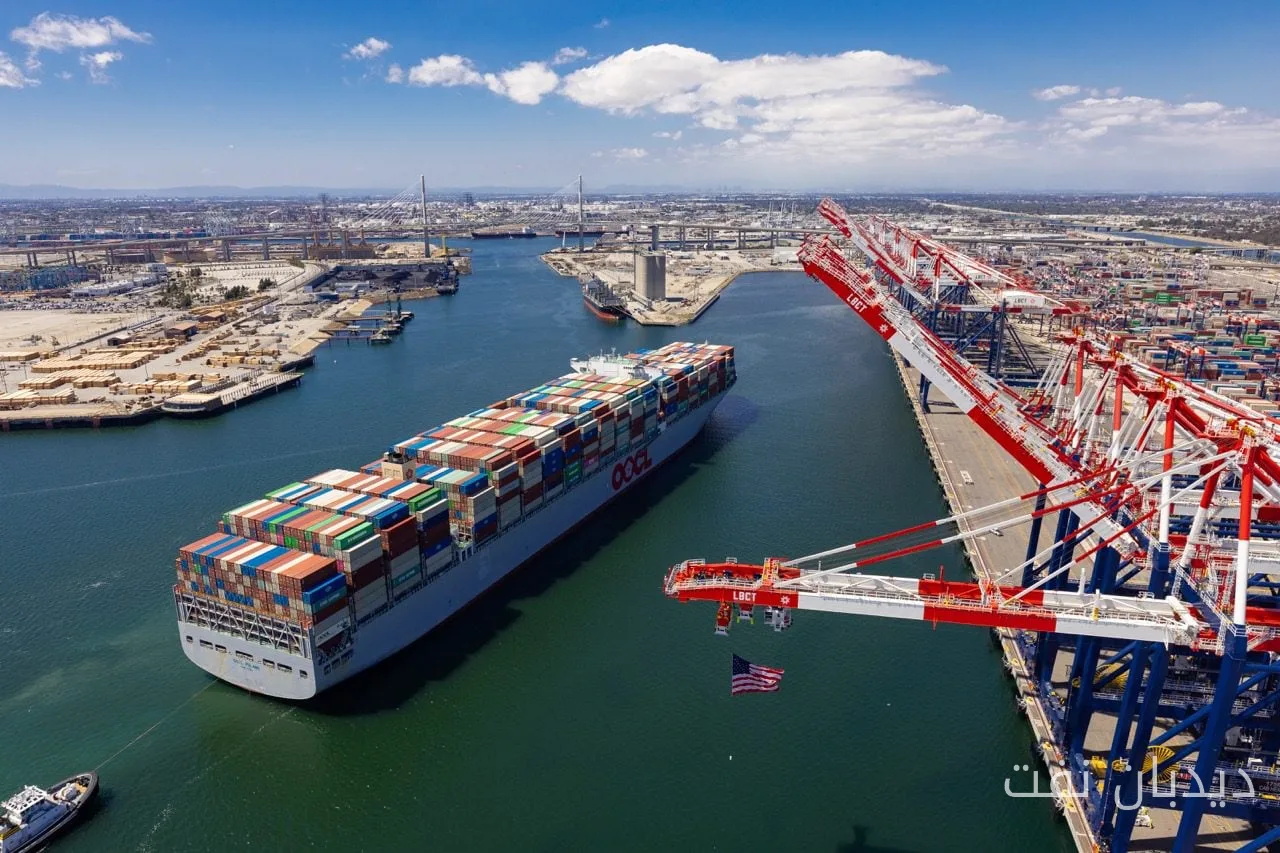
The Ports of Los Angeles and Long Beach set a new record in September 2023 by handling a total of 2.04 million twenty-foot equivalent units (TEUs). These two ports, recognized as the busiest in the United States, had unprecedented performance during the month due to strong demand for imports and shifts in global trade patterns.
Details of Long Beach Port's Performance
Long Beach Port announced on Thursday that it handled 997,177 TEUs in September, a 25 percent increase compared to last year, surpassing the previous record of 987,191 TEUs set in October 2022. This month is considered the busiest in the 115-year history of Long Beach Port.
Read more: Ali Soleimani: Over 91 percent of Ilam residents have low gas consumption bills
This record follows the announcement of the record-breaking performance of the Port of Los Angeles, which handled 1,042,652 TEUs in September. This number is also the highest monthly total in the 118-year history of the Port of Los Angeles.
Reasons for Increased Cargo Handling
Overall, the two neighboring ports handled 2,039,829 TEUs in September, which includes over 1.05 million TEUs of import cargo. This increase is attributed to retailers' efforts to replenish inventories and adjust shipping strategies amid high fuel costs and trade uncertainties.
Noel Hasgaba, CEO of Long Beach Port, stated at the monthly supply chain insight meeting: "Carriers continue to rely on Long Beach Port as a trusted partner in their business strategies, leading to our historic month for loading."
Imports to Long Beach Port increased by 31.3 percent compared to last year, reaching 509,390 TEUs. Exports also saw a 7.8 percent increase, totaling 91,747 TEUs. Movements of empty containers increased by 22.1 percent, reaching 396,040 TEUs.
The Port of Los Angeles also reported similar performance, with import cargo increasing by 19 percent to 545,696 TEUs. The port also managed 125,751 TEUs of exports and approximately 371,206 TEUs of empty containers, both of which have increased compared to last year.
Port officials attribute the significant performance increase to several factors, including sustained consumer demand, reduced U.S. tariffs, and carriers' efforts to find alternative routes instead of traditional paths affected by Panama Canal restrictions and security concerns around the Suez Canal. Additionally, high diesel prices have made the trans-Pacific route to the U.S. West Coast more attractive.
This record-breaking performance in September comes as the National Retail Federation (NRF) expects the peak shipping season to unusually extend soon.
In the latest Global Port Tracker report released, NRF and Hackett Associates have predicted that imports at major U.S. ports will decrease from 2.3 million TEUs in August to 2.28 million TEUs in September, and then drop to 2.25 million TEUs in October and 2 million TEUs in November.
Despite any fluctuations in the final data, it appears that we have passed the busiest part of the year.
Long Beach Port handled 7,675,255 TEUs in the first nine months of 2023, showing a 3.9 percent increase compared to last year. The Port of Los Angeles processed nearly 8.1 million TEUs during the same period, over 3 percent ahead of last year.
Read more: Pezeshkian: Discontent among low-income groups should not occur · Pezeshkian: Identifying the source of deviation in the fuel distribution chain is essential