The Islamic Republic and the Islamic Revolutionary Guard Corps do not necessarily need to seize the oil fields of other countries to influence the global energy market. Iran's geographical position near the Strait of Hormuz, the missile and drone capabilities of the IRGC, its asymmetric naval power, and the network of aligned armed groups have allowed Tehran to turn the energy transit route into a pressure point.
History and Context of the Energy War
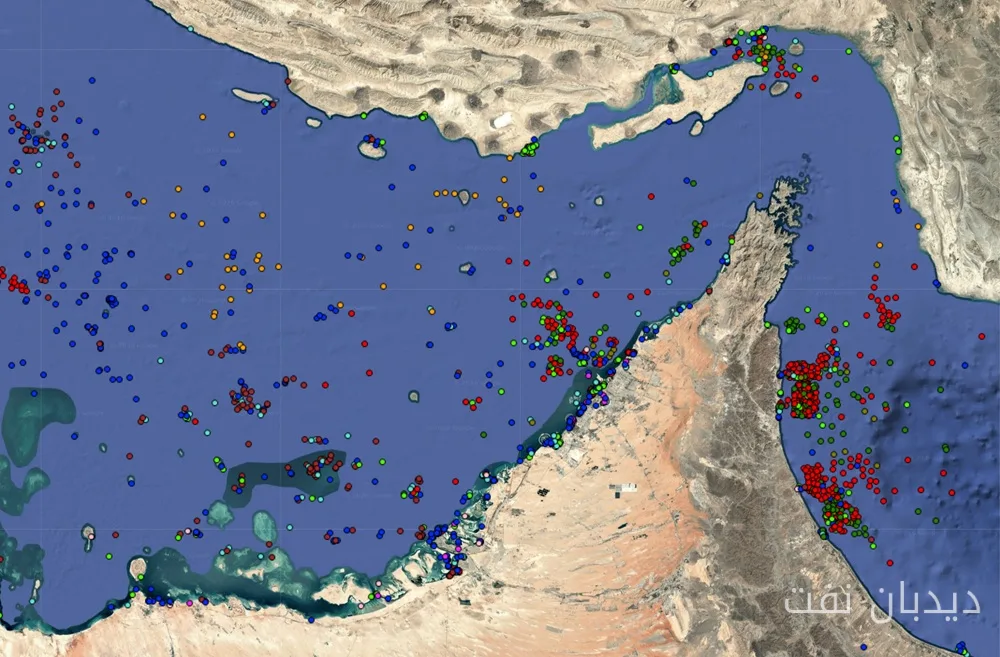
This situation has emerged in the context of a war that began with American and Israeli attacks on the Islamic Republic and then expanded with reciprocal attacks and the imposition of restrictions by the Islamic Republic on shipping in Hormuz. During the war, the IRGC has conditioned the reopening of the Strait of Hormuz on the end of American threats and interventions. On September 14, the Islamic Republic published a list of 77 ships accused of violating the protocols announced by Tehran and threatened them with fines, seizure, or confiscation. Initial data tracking ships indicated that the passage of commercial vessels through Hormuz had dropped to less than 10 per day over the weekend.
Read more: Analysis of the Route and History of Sanctioned Oil Tanker Shipments
Difference in Approach Between ISIS and the Islamic Republic
The main difference can be summarized in one sentence: ISIS sold oil primarily to finance its war and manage its territory; the Islamic Republic and the IRGC, in addition to selling oil, exploit the threat to the energy flow for political leverage in the current crisis. This distinction is not absolute. The U.S. Treasury Department sanctioned networks in May 2026 that, according to this agency, facilitated the sale and transfer of oil belonging to the IRGC. Therefore, oil sales remain part of the IRGC's financing mechanism.
Recent developments clearly illustrate this mechanism. The Houthis aligned with the Islamic Republic have reached the strategic island of Perim at the Bab el-Mandeb Strait and have taken control of it, increasing threats against shipping in the Red Sea. In a separate incident, the East-West pipeline in Saudi Arabia, which was used to bypass the Strait of Hormuz and transport oil to the port of Yanbu on the Red Sea coast, was targeted in a drone attack, halting its operations.
Saudi Arabia and Iraq announced that the drones had launched from Iraqi territory, but no group immediately claimed responsibility for the attack. The presence of Iran-backed groups in Iraq does not alone prove that the IRGC directed this operation. It is also important to distinguish between political and military alignment and direct command of any operation. Reuters reported that this pipeline had transported about four to five million barrels of oil daily in recent months. The route that was supposed to replace Hormuz has now become part of the battlefield itself.
Read more: Pezeshkian: Iran and Oman Agreement to be Signed in Muscat on Monday · Damage to Saudi Oil Pipeline May Affect Global Oil Supply