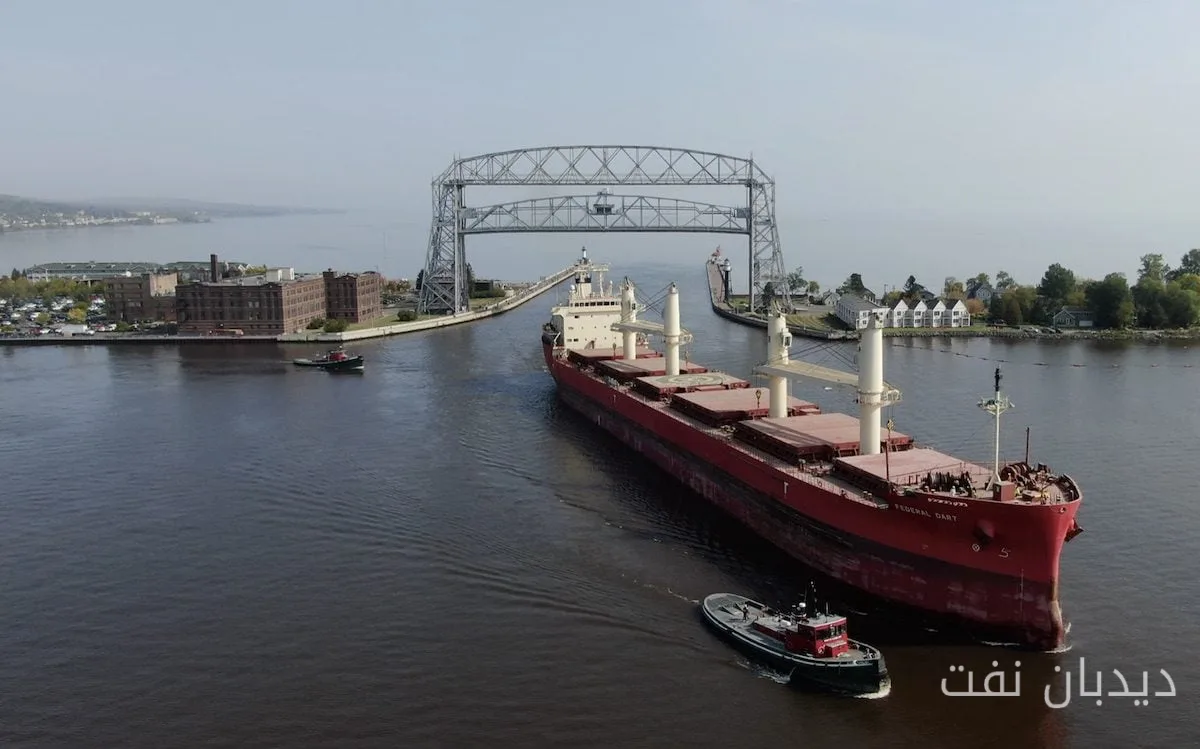
Ship traffic at the Duluth-Superior port has decreased by 23% this year due to U.S. trade tariffs with Canada. This traffic drop, particularly in the transportation of iron ore and coal, has led to supply chain problems in both countries.
Impact of U.S. Tariffs on Trade
According to published data, traffic of U.S.-flagged vessels has decreased by 19% and Canadian vessels by 37%. In 2025, the volume of coal transported reached 4.7 million tons, but this figure is expected to drop to 500,000 tons this year, the lowest level since 1973. This decline in traffic is linked to the issues caused by President Donald Trump's tariffs on iron ore and coal.
Read more: Management of Fuel Imbalance in Iran Requires Structural Reforms
Economic and Social Consequences
The economies of border states and Canada are heavily reliant on maritime trade. With about two-fifths of the U.S.-Canada border crossing water, 200 million tons of goods including coal, grains, and iron ore are transported by sea annually. This situation has not only harmed the economies of both countries but has also fueled tensions in international relations.
Duluth Port Executive Director Kevin Beardsley stated that this trade war is expected to end soon so that trade can return to normal. He also emphasized that Canada is seeking new supply chains, which could pose greater risks for the United States.
The economic geometry of border states and Canada has become highly integrated over the decades, and this region is now recognized as the third-largest economy in the world. This situation has led many economists to criticize the current tariffs and seek solutions to restore trade relations.
Ultimately, while politicians and negotiators discuss tariffs, the daily management of the Great Lakes and St. Lawrence system is jointly conducted by the governments of both countries. This reflects the importance of mutual cooperation in this area and its profound impacts on the economies of both nations.
Read more: Seyed Ismail Hosseini: The 1500 and 3000 Toman Gasoline Quotas Have Not Changed · Diesel Prices in America Hit a Record $6.29