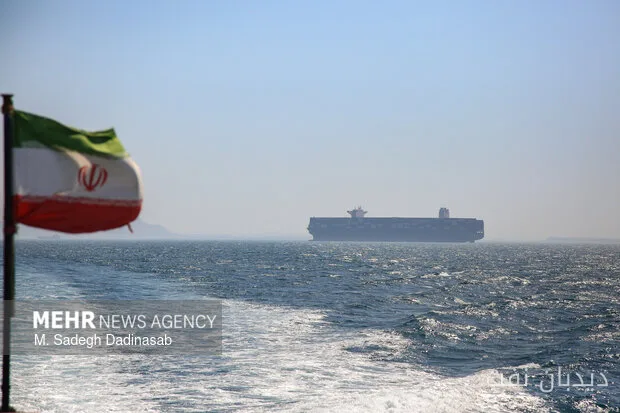
The Strait of Hormuz, as one of the most important routes for tankers, has increasingly become a controversial topic in the energy world. While some sources claim that the Strait of Hormuz is open and oil flow continues without problems, economic realities and energy market conditions indicate greater complexities in this equation.
Impact of Insurance and Security Costs
While tanker passage through the Strait of Hormuz may seem straightforward, the costs associated with insurance and security for this passage have significantly increased. Analysts warn that insurance costs for tankers have risen considerably compared to before the crisis, meaning that the final costs of oil transportation have increased, putting pressure on global energy markets.
Read more: 150 Ships Stopped in the Baltic Due to Increased Traffic in Russian Ports
In fact, if the owner of a tanker is forced to insure their ship at several times the cost, these expenses are passed down the supply chain and ultimately affect oil prices. This situation indicates that even the passage of tankers alone cannot signify a return to normal conditions.
Contradictions in Media Narratives
While the U.S. claims that the Strait of Hormuz is under control and Iran cannot use it as leverage against the West, the behavior of the energy market reflects different realities. If the Strait of Hormuz has truly returned to normal conditions, why are Western governments turning to their strategic reserves? These reserves are typically designed for times of crisis, not when everything is running smoothly.
This contradiction clearly shows that the Hormuz crisis still retains its impact on energy market calculations. Additionally, the media attempts to promote alternative pipelines and new oil transportation routes, while the reality is that these routes cannot fully replace the Strait of Hormuz.
Ultimately, Iran's real power in the Strait of Hormuz is not limited to its physical closure. Rather, Iran's ability to alter the economic calculations of the opposing side and create invisible costs for the West is Tehran's true strength in this region. This means that even if tankers pass through the Strait, the associated costs and risks of this passage can shift economic equations in Iran's favor.
Read more: Meeting of Scott Bassett and Fuad Hussein Focused on Iran Sanctions · Mohsen Paknejad, Minister of Oil of the Islamic Republic, Resigned from His Position