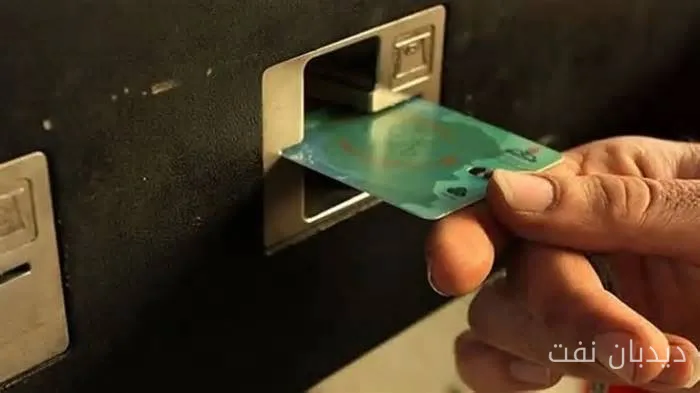
The government of the Islamic Republic of Iran has launched a new pilot plan at several fuel stations in Tehran aimed at improving and managing gasoline consumption. This plan uses bank cards instead of physical fuel cards as a means of verifying drivers' identities. Drivers can use their bank cards to receive a code or "token" and then refuel with an emergency card.
Transformation in the refueling process
This plan seems to be just a new method to solve issues related to fuel cards, but in reality, the main goal of the government is to create a better connection between gasoline consumption, the driver's identity, and the vehicle. Using a token as a digital permit allows for more accurate recording of fuel consumption and can provide important information for analyzing consumer behavior to the government.
Read more: Masoud Benabian: The country's budget deficit will reach 3,340 trillion tomans
Consequences of the new plan's implementation
In the new model, gasoline consumption will not only be registered to the fuel station card but will also be directly linked to the individual and the vehicle. This change could enable the government to examine gasoline consumption patterns more accurately and gradually obtain useful information about consumption levels and allocated quotas. For example, the government could find out how much gasoline each vehicle consumes over a month and how much of its quota it has used.
With this information, the government will be able to make better decisions regarding quota allocations. In situations where consumption data is incomplete, changing quotas will not be easy. However, with more accurate data recording, policymakers will have greater capacity for decision-making in this area.
The future of gasoline subsidy distribution
Given the new infrastructures being developed, it is possible that in the future, gasoline quotas may be allocated to individuals or households instead of vehicles. Additionally, models could be envisioned where quotas are determined based on vehicle mileage or consumption patterns. Thus, tokens and bank cards may become tools for changing the method of gasoline subsidy distribution.
In other words, while a token alone cannot solve gasoline consumption issues, it can pave the way for fundamental changes in policies related to fuel consumption. However, these changes depend on the clarity of information and its optimal use. Ultimately, the question remains whether the government will use this new data solely for recording consumption or will make new decisions regarding quota allocations.
Read more: Smart Fuel System Manager: Personal fuel cards are still valid · Launch of the monitoring and gas cut-off plan for uninhabited villas in Mazandaran