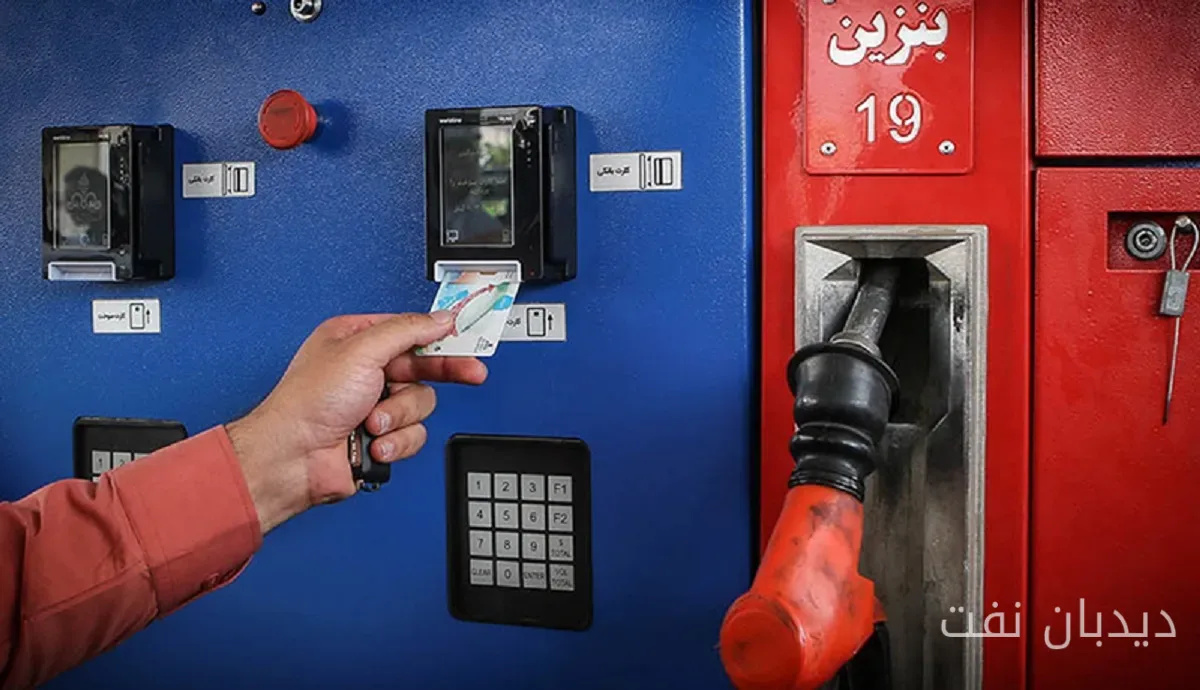
Abbas Basafa, the manager of the Smart Fuel System, announced the implementation of a new plan to use bank cards as a complementary method in the refueling process in the country. This plan is designed to increase transparency and reduce fuel smuggling.
Start of Implementation in Tehran
Basafa, in a program on Radio Economy, referred to the challenges of using personal fuel cards due to various issues, and announced the start of the "identification" process for refueling in Tehran. He stated that if conditions are favorable, this plan will be implemented throughout Tehran by the end of October and subsequently across the country.
Read more: Increase in Gas Shipments from the Strait of Hormuz to the Highest Level Since the Start of the War
Refueling with a Bank Card
The manager of the Smart Fuel System explained that with a valid bank card, individuals can carry out the refueling process at fuel stations. After swiping the card, a voucher containing a four-digit code is provided to them, which is used to receive fuel. Basafa emphasized that there is no need to receive a text message or send information via mobile phone for this process, and authentication and token issuance will be done on-site.
Refueling Limit and Infrastructure Security
Basafa also discussed the refueling limit in Tehran, stating that currently, the limit is set at 25 liters per session. He referred to the security of the infrastructure of this plan and added that the main goal is to create an alternative method for refueling and reduce dependence on a single method so that in case of technical or cyber issues, the refueling process for the public does not come to a halt.
Continuity of Validity for Personal Fuel Cards
The manager of the Smart Fuel System further addressed the issue of personal fuel cards, stating that these cards remain valid, and their related quotas will be charged according to the established procedure. Basafa also mentioned the examination of using license plate recognition cameras for fuel management, noting that this issue faces challenges.
He concluded by emphasizing that the main goal of using new technologies in the Smart Fuel System is to reduce smuggling and prevent off-network supply, and efforts will be made to implement more effective measures in this area in collaboration with relevant authorities.
Read more: Development of Trade Cooperation between Iran and Pakistan in Agriculture and Fisheries · Pezeshkian: All Agencies are Responsible for Reforming Energy Consumption Patterns



