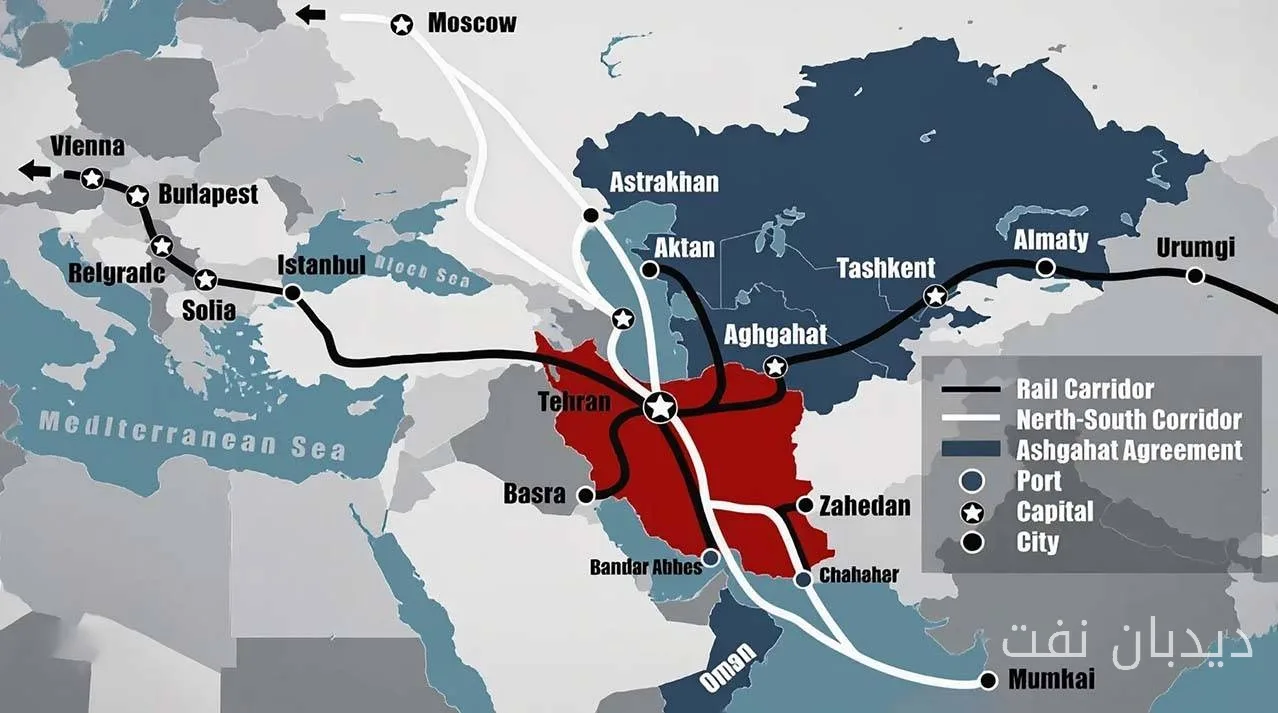
The book "Iran Road" by Mehrdad Bazrpash and a group of authors will soon be published by Amir Kabir Publishing. This specialized work in the field of transportation, logistics, and transit analyzes the commercial routes and transportation networks surrounding Iran.
Analysis of Iran's Transit Capacities
The book "Iran Road" is published at a time when Iran has been facing sanctions and economic challenges for years. The authors introduce several trade corridors in this book that can facilitate the transfer of energy, goods, data, and services between different countries. These corridors will impact not only economic aspects but also social and cultural dimensions.
Read more: Ministry of Industry's planning for fuel supply to industries by the end of Esfand
With the improvement and development of transit corridors, the possibility of moving goods faster and at lower costs will be provided, ultimately leading to an increase in foreign trade volume and revenues from the export of goods and services. With its vast oil and gas resources and access to the Persian Gulf, Iran can act as an important energy supplier for neighboring countries and other regions of the world.
Chapters and Content of the Book
The book "Iran Road" is structured into 5 chapters, including titles such as "From the Silk Road to Contemporary Developments," "Islamic Revolution and Geopolitical Achievements," "Global Trade Routes," "Iran Road Initiative," and "Iran Road and the Future." The main goal of the authors is to introduce Iran's geopolitical position at the intersection of three continents: Asia, Europe, and Africa, as a pivotal point in international corridors.
The authors, emphasizing the theory of regional connectivity, seek to design alternative programs to face economic challenges and sanctions. According to this theory, Iran can become a regional transit hub through investment in various connections, enhancing economic convergence and regional diplomacy.
The book "Iran Road" will soon be available with 294 pages and will elaborate on the angles of this initiative and its importance in transit policymaking. The authors believe that this book can assist in aligned decision-making in the field of transit and transportation and lead to greater coherence in economic and trade policymaking.
Read more: Mohammad Nozari emphasized the necessity of sustainable fuel and energy supply in Qazvin · Formation of a Jihad Headquarters for Conservation in Chahardangeh to Combat Sanctions