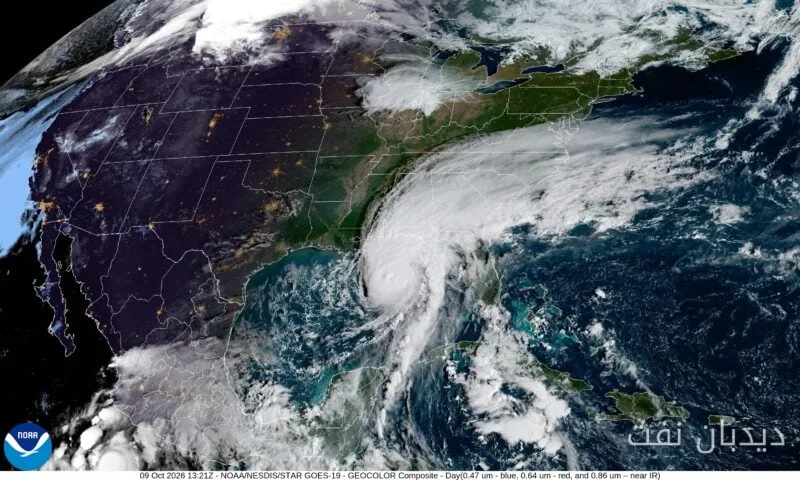
Hurricane Isaias is moving towards the northern shores of the Gulf of Mexico as a Category 3 storm with winds reaching 120 miles per hour on October 9, 2026. This storm poses a serious threat to oil and gas operations in the area and is expected to cause significant damage to infrastructure.
Impact on Oil Production
According to reports, nearly two-thirds of U.S. oil production in the Gulf of Mexico has been halted due to this storm. Statistics indicate that 62.9 percent of oil production in the Gulf, equivalent to 1.28 million barrels per day, has been suspended. Natural gas production has also decreased by 57.4 percent.
Read more: Projekko signed a five-year contract with Azule Energy for the Angola oil project
At the time of this report, Isaias was located about 240 miles south of Pensacola, Florida, moving north-northeast at a speed of 15 miles per hour. The storm is expected to turn north on Friday afternoon and make landfall on Friday night or Saturday morning.
Precautionary Measures and Personnel Evacuation
Officials have also announced that personnel have been evacuated from 121 oil production platforms, which accounts for nearly one-third of the 371 facilities in the Gulf. Five drilling rigs have also been evacuated, and four dynamically positioned rigs have left their locations. Major oil companies like Shell, Chevron, and BP have reduced their operations and evacuated workers from facilities in the storm's path.
This damage to oil production has added to the existing crises in the global oil market, while shipments through the Strait of Hormuz have also faced disruptions, and tensions in the Middle East are rising.
The National Hurricane Center (NHC) has also issued warnings about the devastating impacts on the coasts due to this storm. The storm warning remains in effect for areas from Ocean Springs, Mississippi, to the county line of the Gulf in Florida. Additionally, tidal storm warnings remain in effect from the mouth of the Mississippi River to the Suwannee River in Florida.
The greatest threat from the tidal storm is along the Alabama-Florida border extending east to Grayton Beach, Florida, where water levels may reach 6 to 9 feet above dry land. Other areas of the northern Gulf will also face tidal storms of 3 to 7 feet.
Read more: The readiness of the Lavan oil refining forces prevented casualties in the imposed war · Valeura Energy began offshore installation at the Wassana field ahead of schedule