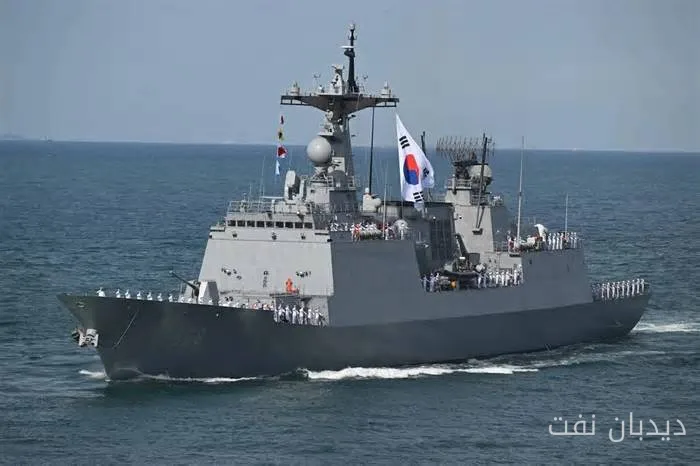
South Korea is considering sending naval forces to the Strait of Hormuz in order to cooperate with the United States. This decision comes as the government of Lee Jae-myung faces domestic and foreign pressures to support the U.S. in the Iran war.
Domestic and Foreign Tensions
The South Korean government was on the verge of a sensitive decision last week. Reports indicated that plans to send ships and naval aircraft to the Strait of Hormuz for a so-called "non-combat" mission were advancing. Presidential officials emphasized that a final decision has not yet been made. In this context, Iran has also reacted to the possibility of this deployment and has issued warnings in the Korean language.
Political and Social Concerns
The majority of South Korean citizens oppose the deployment of warships to the Strait of Hormuz according to polls, and this issue has been challenged in protests held outside the presidential office. Political divides on this matter are also clearly evident; the left calls for caution while the right is concerned about disappointing their most important military ally, the United States.
Past experiences of South Korea in military partnerships with the U.S., especially in the Vietnam and Iraq wars, have raised concerns in society. These experiences have drawn significant criticism and have always fueled the inequality in relations between Seoul and Washington.
If South Korea is deployed to Hormuz, its mission is likely to be recognized as "non-combat." However, in a context where modern wars are accompanied by missile and drone threats, the line between military and non-military operations is not easily distinguishable.
Moreover, conservatives in South Korea hope that aligning with the U.S. can help maintain U.S. military support for the country. At the same time, parts of the business community believe that political cooperation with Washington is a way to maintain access to the U.S. market.
Ultimately, the decision to send forces to Hormuz could carry high political costs for South Korea and strengthen anti-American sentiments in society. This situation raises a big question: Can the pressure to cooperate with the U.S. in the Iran war drive one of its most reliable Asian allies away?
Read more: Swedish Club: The Cape Horn Route is Not a Simple Alternative to the Panama Canal