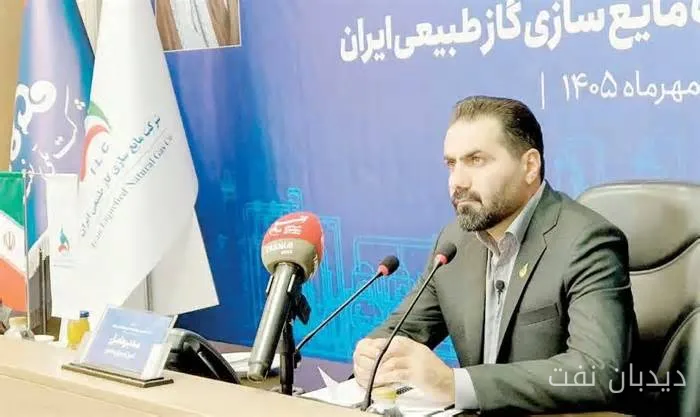
The Iran LNG project, recognized as one of the most important natural gas liquefaction projects in Iran, has returned to the implementation stage after nearly 20 years of halt. Amin Norouzi-Masir, the CEO of the National Iranian Gas Liquefaction Company, announced in a recent press conference that with a change in the execution scenario and new financing, this project could reach production within 36 months.
History and Importance of the Iran LNG Project
Iran LNG is a strategic project for converting natural gas to LNG and providing the possibility of exporting it to global markets. However, over the past two decades, this project has remained in limbo due to sanctions, lack of investment, and halted operations. During this time, billions of euros have been invested in the project, and significant infrastructure and equipment have been established, yet no commercial LNG shipment has been sent from Iran to the global market.
Read more: The Ministry of Oil and Mineral Resources has selected TDI-Brooks for marine surveys
Change in Execution Scenario and Financing
The CEO of Iran LNG mentioned the change in the execution scenario and stated that the new plan focuses on reducing dependence on foreign equipment and manufacturers. Norouzi-Masir added that the project execution time in this scenario has been reduced to 36 months, and the critical path of the project is gas sweetening. Given the challenges in securing foreign equipment due to sanctions, these changes could help accelerate the project's implementation.
The financial dimensions of the project are also significant. So far, about 2.2 billion euros have been spent on this project, and the value of capital and costs on the project site is estimated at around 10 billion euros. Approximately 1.1 billion euros in financing is needed to operationalize "Train One" of this project, and a total financing of 1.5 billion euros has been considered for the main project commitments.
Future Outlook and Target Markets
The revival of the Iran LNG project not only means the launch of a new plant but also an effort to return to a competition that Iran has lagged behind in over the past two decades. Norouzi-Masir emphasized that it should be determined what position Iran wants to hold in the LNG market. This project can help diversify the gas supply sources for consumer countries and enhance energy security.
In the new plan, the target is to produce about 1.2 million tons of LNG and 440 thousand tons of LPG annually. This reduction in capacity is seen as part of the change in the project's execution scenario so that Iran can achieve production sooner. Additionally, the CEO emphasized that the necessary approvals and correspondence with the National Iranian Oil Company and the National Petrochemical Company have been completed, and two sweetening trains have been planned to supply gas to the national grid.
Read more: Borr Drilling wins new drilling projects in West Africa and Europe · Oil shipment delivered en route to sanctions destination China



