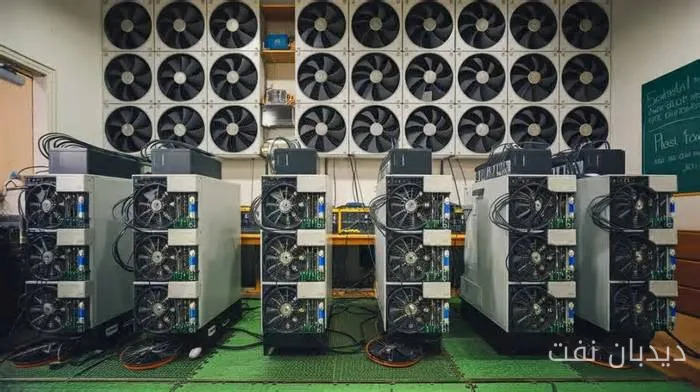
The Parliament Research Center has calculated the electricity consumption of miners in the national grid. According to this report, the power consumption of cryptocurrency mining in Iran is estimated to be around 930 to 1200 megawatts, a figure that corresponds to about 6 percent of the total electricity imbalance in the country during the hot season over a four-month period.
Consequences of Illegal Cryptocurrency Mining
Illegal cryptocurrency mining, in addition to abusing energy subsidies, imposes restrictions on electricity supply during peak consumption times in summer and winter, leading to a decrease in public welfare and a decline in gross domestic product. To estimate the electricity consumption of cryptocurrency mining, two methods can be used: the first method is based on Iran's share of global hash rate, and the second method is based on analyzing changes in electricity consumption during the nationwide internet outage in January 2025. The results of the network load analysis show that after the nationwide internet outage, the average base load of the network decreased by about 927 megawatts during the hours of 3 to 5 AM.
Impacts on Electricity Consumption
This report emphasizes that not all of this decrease is necessarily related to cryptocurrency mining, and part of it may be due to reduced activity in data centers, servers, and other internet-dependent infrastructures. Additionally, the use of alternative communication routes by some miners, including satellite internet, is not accounted for in this estimate. The hash rate-based estimate also predicts the electricity consumption of cryptocurrency mining in Iran before the Ramadan War to be around 1037 to 1150 megawatts.
The electricity consumption of cryptocurrency mining is estimated to be around 700 million kilowatt-hours per month. Considering an average deficit of five billion kilowatt-hours of electricity during the hot months of the year, the consumption of this sector accounts for about 14 percent of the monthly energy deficit in the peak summer consumption period. If the electricity consumption of cryptocurrency mining were eliminated, the share of hours without electricity deficit (imbalance) in summer would increase from 5.2 percent to 33.6 percent. In the same conditions, the share of hours with a deficit of less than one thousand megawatts would decrease from 28.7 percent to 2.1 percent.
Furthermore, the share of hours with a deficit of more than ten thousand megawatts, with the elimination of this consumption, would drop from 17.9 percent to 12.3 percent. Cryptocurrency mining is not the main cause of the country's electricity imbalance, but controlling and eliminating unauthorized consumption can reduce the severity and frequency of network imbalance.
If the electricity consumption of cryptocurrency mining is fully supplied by thermal power plants, it would reach about 8.46 billion kilowatt-hours annually. Meeting the energy needs of this activity requires about 2.1 billion cubic meters of equivalent gas fuel. Assuming the use of imported diesel at a minimum price of 70 cents per liter, the annual financial burden of supplying the fuel needed for cryptocurrency mining is estimated to be around 1.5 billion dollars; a figure that does not include the cost of converting fuel to electricity and the losses resulting from reduced production in economic sectors.
Cryptocurrency mining with the equipment examined in the residential sector and with higher tariffs is not economically justified; however, it can be profitable in agricultural, commercial, industrial, and public sectors. For this reason, unauthorized mining activities are mainly conducted through illegal connections, using connections with economic tariffs, or exploiting the internal electricity of power plants. According to this report, the continuous consumption of miners causes the rapid transfer of consumers' consumption to higher tariff brackets, making the use of legal connections riskier.
Identifying unauthorized mining is not possible solely through comparing consumer consumption, and traditional methods must be replaced with smart and integrated monitoring systems. Proposed solutions include analyzing network load patterns, examining non-technical losses in the distribution network, matching feeder and consumer consumption with internet traffic data, and analyzing the internal consumption of power plants.
Smart identification and monitoring are significant because so far, 2500 megawatts of unauthorized electricity consumption, of which miners are a part, have been identified, and according to Tavanir, an equal amount of unauthorized consumption remains unidentified, which, if discovered, would further reduce the electricity imbalance.