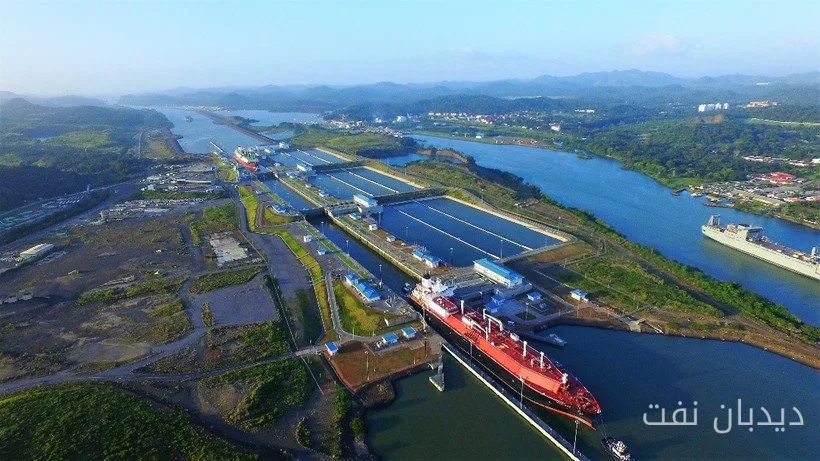
The Panama Canal has recently announced new criteria for allocating transit capacity at the Neopanamax locks. These changes have been implemented immediately, and the previous criteria, which were in effect until July 2026, will revert to their original state.
New Transit Capacity Allocation Criteria
According to these changes, available capacities during transit periods 1A and 2 will be offered through a special allocation process. Priority for allocation will be given in the following order: container ships, liquefied natural gas (LNG) carriers, liquefied petroleum gas (LPG) carriers, and roll-on/roll-off (RoRo) ships. In each category of vessels, the Transit TEU Allowance (TTA) will be considered the main criterion for resolving disputes.
Read more: $57 Million Sale of Tauranga Port for Infrastructure Investment
NetZero Program and New Requirements
In addition to changes in the allocation system, the Panama Canal has introduced new requirements for vessels that are transiting this waterway for the first time to participate in the NetZero program. This program is designed to support and encourage investment in low-carbon and energy-efficient vessels.
According to the new requirements, vessels must undergo an initial inspection by the Panama Canal measurement unit. To facilitate participation in this program, these inspections can also be conducted outside of Panama. Starting November 1, 2026, ship owners, operators, or authorized representatives can request the initial inspection before the vessels enter the canal waterway. This allows the Panama Canal to obtain the necessary information to calculate fees, determine vessel tonnage, and identify their engine types in advance.
Applicants must provide the required technical documentation, pay all related fees and charges, and coordinate necessary arrangements at the port where the vessel is located. This initial inspection will in no way replace the final approval or any other inspections that may be required prior to transit.
These measures generally reinforce the Panama Canal's commitment to encouraging the adoption of low-carbon and energy-efficient vessels while maintaining clear and predictable criteria for transit capacity allocation.
The full text of these regulations is available in Shipping Advisory No. A-40-2026.
Read more: Colombia Increases LNG Imports Due to Decreased Natural Gas Production · Fire on Violating Oil Tanker in Eastern Strait of Hormuz