A Norwegian consortium led by Emerald Nuclear Norway is preparing to build and test an integrated nuclear propulsion system. This project, aimed at a Marine Nuclear Propulsion System (MarNuPS), intends to launch its first vessel in 2031 or 2032.
Transition to Testing Phase
This project, which includes collaboration with Vard and Island Offshore, is currently moving from engineering studies to physical integration and testing. A complete test facility in Stette near Ålesund is planned for 2027.
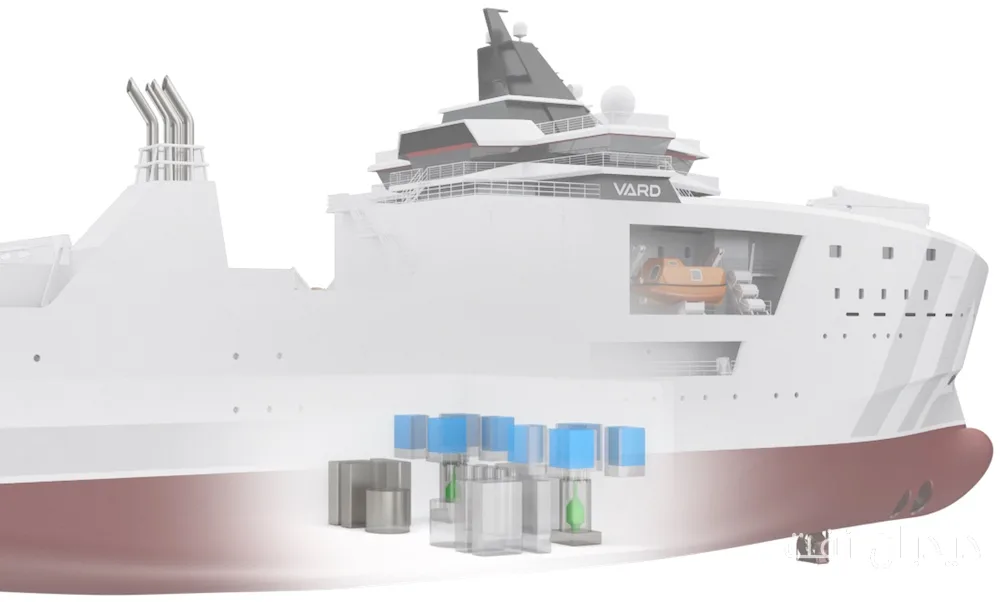
The MarNuPS project will utilize Emerald Nuclear's 5-megawatt electric micro-reactor technology and energy storage, power conversion, ship power management, and operational automation systems.
Initial Testing and Simulation
In the initial testing phase, electric heating will be used instead of nuclear fuel to simulate reactor performance. This allows engineers to evaluate the propulsion system's performance under real operational conditions of the vessel. The tests will examine normal operations, rapid changes in power demand, system stress, emergency responses, and interaction with the ship's crew.
The consortium includes Vard Group, Vard Electro, Island Offshore, Norwegian University of Science and Technology (NTNU), Imperial College London, and specialized engineering firm Maskindynamikk. Vard will be responsible for the ship's design and system integration, while Vard Electro will develop power management and automation systems. Island Offshore will also contribute its operational expertise to the project and intends to be the first shipowner to install this technology on a marine vessel.
This initiative is based on the NuProShip research program led by NTNU, which examines the feasibility of integrating advanced nuclear reactors into commercial transportation. Earlier this year, Vard presented the concept of a nuclear marine construction vessel developed through NuProShip II.
The project has recently received 20 million Norwegian kroner (2 million USD) from the Research Council of Norway, while its initial development phase is expected to cost around 150 million Norwegian kroner (15.6 million USD), including contributions from partners.
Although the project aims for commercial demonstration in the early part of the next decade, the actual deployment of the vessel depends on completing technical qualifications and obtaining necessary permits.
Read more: Norway seeks to exploit Barents Sea gas with new discovery