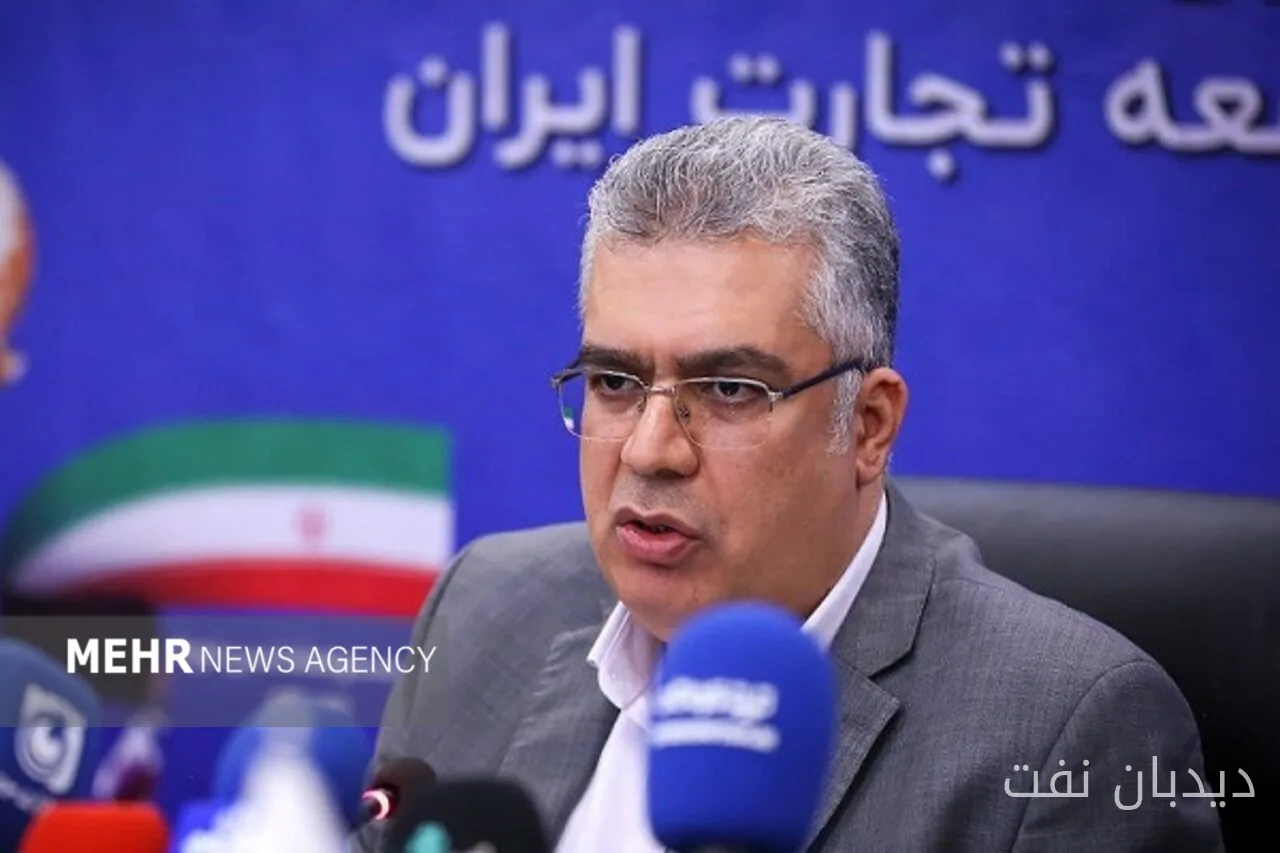
Mohammad Ali Dehghan Dehnavy, Head of Iran's Trade Development Organization, addressed the country's export capacities at a specialized meeting titled "New Export Drivers; From Enterprise-Centric to Professional Market Management" at the Tehran Chamber of Commerce. He stated that holding such meetings provides opportunities to identify challenges and new capacities in the export sector.
Analysis of Iran's Export Performance
Dehghan Dehnavy, referring to the country's export performance last year, announced that the value of Iran's non-oil exports has reached about $52 billion. This figure ranks third in terms of export volume compared to previous years. He also compared Iran's export performance with that of Turkey, noting that Turkey has about $350 billion in goods exports, equivalent to approximately $1 billion in daily exports.
Read more: Trade Halt at Rimdan-Gabd Crossing and Iran's Border Challenges
He added: "Comparing these figures shows that the country's export capacity is significantly greater than its current performance. Iran has extensive capacities in the fields of oil, gas, energy, mining, and natural resources that need to be addressed."
The Role of Export Consortiums
The Head of Iran's Trade Development Organization emphasized the importance of export consortiums for expanding cooperation among economic enterprises. He stated: "Consolidating the capacities of enterprises that have common capabilities or needs creates synergy in the export sector, and achieving this model does not require complex structures."
Dehghan Dehnavy also discussed the costs related to market research, explaining that with the participation of several enterprises, costs can be significantly reduced. For example, if the cost of conducting a market study is $200,000, with the participation of 10 enterprises, each enterprise's share would decrease to $20,000.
He continued: "An export management company can leverage its capabilities to facilitate the presence of 10, 20, 50, or even 100 medium-sized companies in target markets."
Revising Export Guidelines
Dehghan Dehnavy pointed out the need to revise the guidelines for export management companies, stating that these reforms aim to more accurately identify the capacities and real capabilities of companies. He also mentioned the consequences of unprofessional entry into export markets and emphasized that this type of entry can lead to negative competition and the supply of low-quality products.
In conclusion, the Head of Iran's Trade Development Organization urged economic activists to engage in export management with their experience and international connections, stating: "Export management companies can help producers find new markets and earn income in this process."
Read more: Iran's Control Over the Strait of Hormuz Has Weakened and Arabs Are Exporting More Oil · Changing the Economic Governance Model in Iran is Essential



