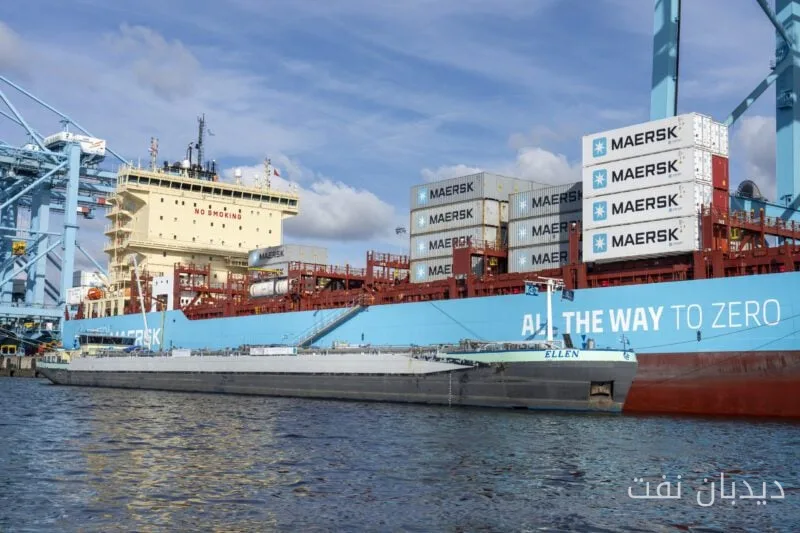
The new Lloyd's Register (LR) report indicates that the global maritime transport industry is ordering alternative fuel ships faster than ports can develop the necessary refueling infrastructure. This issue has become a serious challenge for ship owners who are trying to shift to cleaner technologies.
Increase in Orders for Alternative Fuel Ships
According to the new Lloyd's Register report titled "Fuel for Thought: Ports," by January 2026, 1,942 ships capable of refueling with alternative fuels were on order, accounting for 47 percent of total global orders by weight. This information was provided by Clarkson's Research. However, the infrastructure needed to support these ships varies significantly depending on the type of fuel.
Read more: Tanzanian AS Dream fleet rescued in sinking incident off the coast of Cyprus
For example, liquefied natural gas (LNG) refueling is available at 222 ports worldwide, while only 25 ports actively offer methanol refueling. Additionally, ammonia refueling has been recorded at only one port, which conducted its first operation in Ulsan, South Korea, in April 2026.
Infrastructure Constraints and the Need for New Strategies
Kamran Al Haq, Senior Vice President of Port Consulting at Lloyd's Register, states: "The fleet is moving faster than the necessary infrastructure to support it. An owner can order an alternative fuel ship today, but that does not mean fuel will be available at the location where that ship needs it. Fuel strategy and trade strategy can no longer be considered separately."
Given the increase in orders for alternative fuel ships, especially LNG, this report clearly indicates that ship owners must consider where and how they can find the fuel they need. In September, data provided by the DNV alternative fuels insight platform showed that owners ordered 69 alternative fuel ships that month, the highest monthly number in nearly two years.
In light of these challenges, ports must make decisions about where to invest. The ports of Los Angeles and Long Beach have identified LNG and methanol as acceptable alternative fuels for the near future.
According to Lloyd's Register, the next phase of the transition to alternative fuels will require targeted investment, legal readiness, and closer coordination with shipping companies and fuel suppliers. Specific risk assessments at each port, permits, emergency response capabilities, and workforce training for transitioning alternative fuels from trials to everyday commercial operations will be essential.
Ultimately, the key message for ship owners is that ordering an alternative fuel-capable ship is only part of the transition to such fuel. Ensuring availability, pricing, and commercial viability of fuel along the intended trade routes of the ships is equally important.