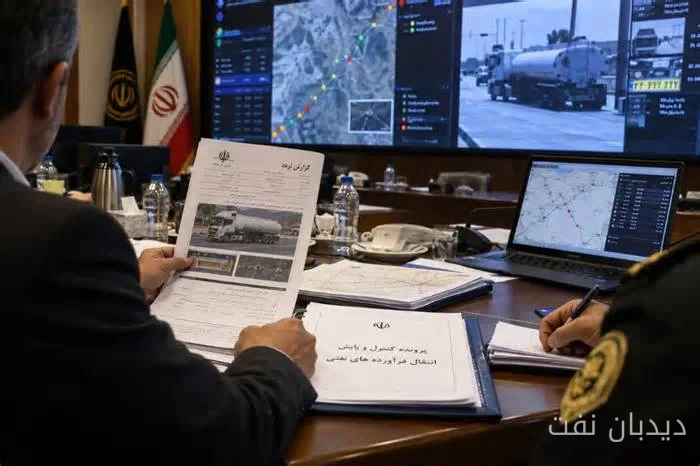
Farzad Dadkhah, the director of road maintenance and transportation in Isfahan province, emphasized the importance of developing monitoring systems and analyzing transportation data at the meeting of the Judicial Committee for the Prevention and Combat of Organized Fuel Smuggling. He explained that the information recorded in smart systems, including data from license plate readers, traffic records, vehicle speeds, and issued waybills, can assist in identifying unusual transportation patterns and detecting violations.
Data Analysis and Identifying Violations
Dadkhah stated the necessity of verifying the accuracy of waybills, noting that the information contained in transport documents should be matched with the specifications of the vehicle and the actual route taken. He also referred to challenges such as the destruction or theft of monitoring equipment and the costs of maintaining and supporting these systems, emphasizing the need to strengthen infrastructure and coordination among relevant agencies.
Read more: Oil exports from the Persian Gulf have reached their highest level before the war
Monitoring Transport Documents and Legal Action
Seyed Mohammad Mousavian, the public and revolutionary prosecutor of Isfahan province, also emphasized the precise implementation of laws and regulations against fuel smuggling at this meeting. He stated that responsible agencies must fulfill their legal duties, and in the event of a violation or omission, the matter should be pursued through legal channels. Mousavian stressed the need for continuous monitoring of transport documents and matching waybill information with fuel consumption levels and patterns, adding: "Effective combat against fuel product smuggling requires continuous monitoring, thorough examination of information, and tracking violations at all stages of the transportation and distribution chain."
He also emphasized the necessity of ongoing preventive measures and deterrent action against violations, stating that none of the related sectors should be exempt from oversight and scrutiny due to a smaller share in violations.
Mousavian deemed regular expert meetings and increased coordination among responsible agencies, including the Road Maintenance and Transportation Administration, traffic police, fuel distribution companies, and intelligence and monitoring agencies, as essential. He added that identifying and addressing existing gaps in monitoring processes would facilitate more effective combat against fuel smuggling.
At this meeting, maximizing the capacity of smart systems, continuous monitoring of fleets and transport documents, identifying high-risk routes, and strengthening interaction among executive, law enforcement, intelligence, and judicial agencies were emphasized as strategies for preventing and combating organized fuel product smuggling.
Read more: Return of crude oil exports from the Persian Gulf countries to 16.5 million barrels per day · Free zone managers appointed as heads of task forces to combat goods and currency smuggling