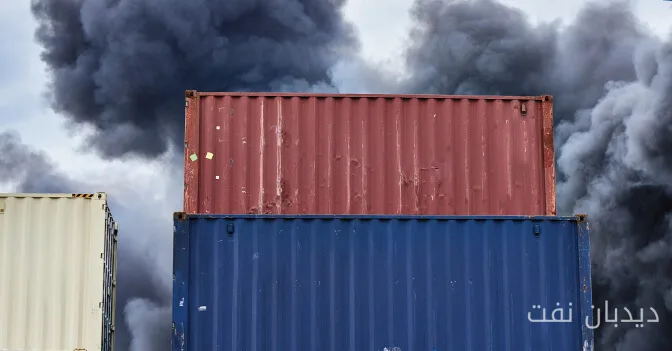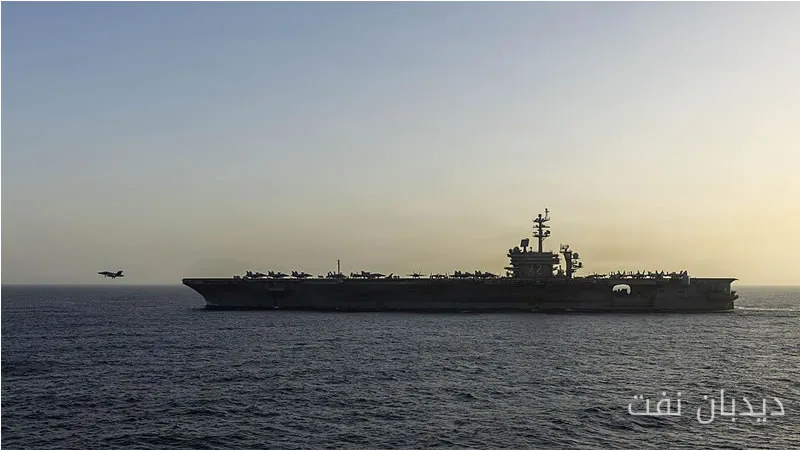
The IRGC Navy announced on Thursday, October 30, that four vessels were targeted in the northern Persian Gulf due to their role in "illegal oil transfer." According to the IRGC, these vessels caught fire simultaneously after being monitored by Iranian forces. Additionally, three other vessels in the western Strait of Hormuz were damaged due to a mine collision.
Military Threats from the U.S. and Israel
These maritime developments occur amid multiple reports of the U.S. and Israel preparing for another round of attacks on Iran. Benjamin Netanyahu, the Prime Minister of Israel, stated that the overthrow of the Islamic Republic is the "only way" to end the Iranian threat and has communicated this objective to the Israeli military, Mossad, and security agencies.
Read more: Significant decrease in global piracy to the lowest level since 1992
According to news sources, Netanyahu had instructed the Israeli military to prepare for a large-scale multi-day operation against Iran. These attacks, planned for around October 10, would target nuclear facilities and civilian infrastructure in Iran. However, Donald Trump opposed the resumption of war ahead of the U.S. midterm elections on November 3, but the possibility of resuming attacks after the elections remains.
Military Readiness and Diplomacy
Reports also indicate that the U.S. and Israeli militaries have prepared specific options for a new round of attacks. The New York Times, citing American officials and individuals familiar with the planning, reported that the two militaries have increased their exercises and conducted flights over Iraq to practice offensive operations. Potential targets include nuclear facilities, missile stockpiles, and Iran's energy infrastructure.
Meanwhile, Vladimir Putin, the President of Russia, has proposed mediation between Tehran and Washington, and Abbas Araqchi, the Foreign Minister of the Islamic Republic, emphasized that the U.S. must comply with Iran's conditions. Araqchi previously stated that indirect negotiations between Iran and the U.S. through Pakistan and Qatar are ongoing, and Tehran has presented a "seven-day plan" for reopening the Strait of Hormuz.
All these developments indicate a fragile situation in the region, where military threats and diplomatic efforts are proceeding simultaneously. At the same time, the increase in attacks on Saudi Arabia's civilian infrastructure has also heightened regional tensions.
Read more: Reza Sepahvand: Two million liters of gasoline are smuggled daily in Tehran · Russia ready to send the first diesel shipment to the U.S. on October 22