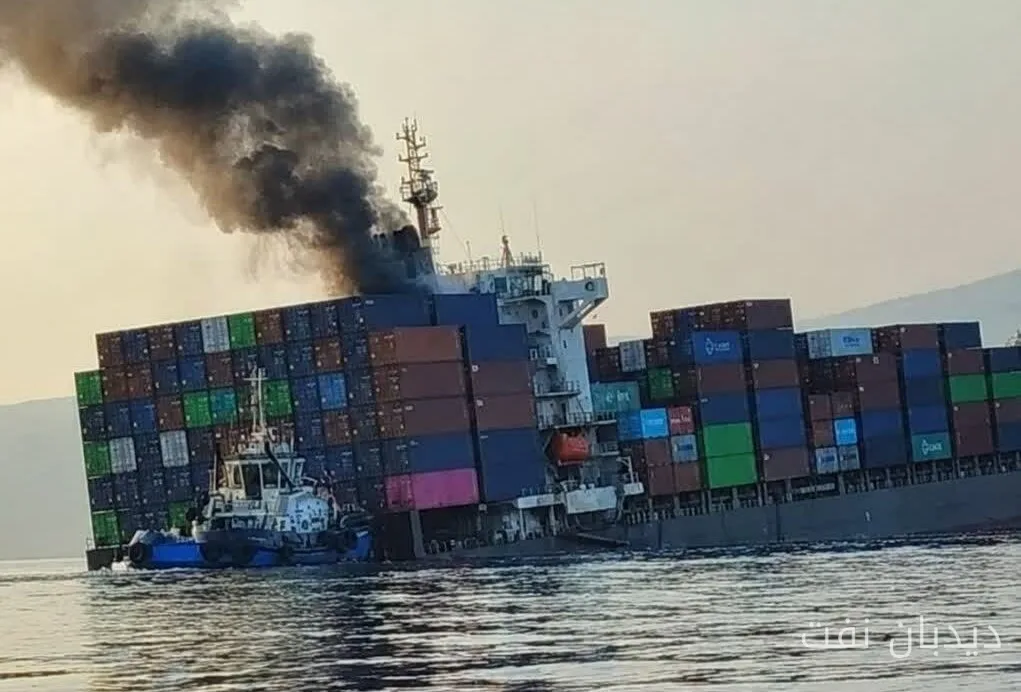
The Strait of Hormuz has once again become the center of military confrontation between Iran and the United States. The increase in attacks on ships and the decrease in oil transfers have darkened the outlook for global energy trade. The Navy of the Islamic Revolutionary Guard Corps has recently warned that "the Strait of Hormuz is closed" and the consequence for vessels defying Iranian regulations is "burning in the fire of the American terrorist army's wrath."
Increase in Attacks and Decrease in Oil Transfers
Reports from the Strait of Hormuz indicate that vessels operating in this area are facing the most intense period of missile and drone attacks from Iran since the beginning of the war. According to data from a reputable newspaper, in the two weeks leading up to October 11, 24 vessels were targeted, a figure higher than in previous periods of the war. Among these, three tankers carrying petroleum products and two tankers carrying crude oil belonged to companies from China and South Korea. On October 11 alone, six vessels were attacked, resulting in several sailors being injured and two Indian crew members going missing.
Read more: Challenges of Maritime Straits During Transit Restrictions
Military and Economic Tensions in the Strait of Hormuz
This data indicates an expansion of risk in trade routes that is no longer limited to a single incident. Furthermore, the Institute for the Study of War has suggested that Iran is developing its anti-ship missile capabilities. In this context, the Navy of the Islamic Revolutionary Guard Corps claimed that a rogue supertanker caught fire due to hitting a sea mine. This vessel was carrying over two million barrels of crude oil and attempted to pass through an illegal route by turning off its positioning systems.
Despite these disruptions, the CENTCOM commander reported that 400 vessels and 100 million barrels of oil passed through the Strait of Hormuz in the past week. He also claimed that the Strait of Hormuz is under the control of the United States and regional partners. At the same time, data from a commodity information company indicates a significant decrease in oil transfers out of the region. The average oil transfer from the Persian Gulf to outside in September was 15.5 million barrels, but with the increase in attacks, this figure dropped to 2.9 million barrels on October 11.
Read more: Iran Officially Protests to the IMO Regarding U.S. Military Abuse of Channel 16 · Increase in Attacks on Ships in the Strait of Hormuz Following Decrease in Oil Exports



