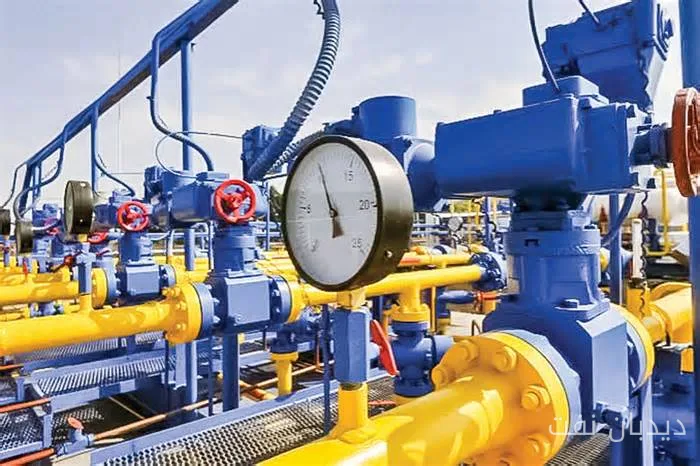
The Iran Gas Transmission Company has prepared its network for the peak consumption period of winter as of October 2026. The company has announced that a series of repairs, monitoring of lines, upgrading facilities, and strengthening operational areas are underway. Additionally, with the operation of new lines and the commissioning of pressure boosting facilities, the country's gas transmission capacity has increased.
Network Readiness and Potential Challenges
Nevertheless, the important question for households is whether these measures can mean the elimination of gas outages in winter 2026? The precise answer is that the network's readiness has created conditions for greater stability, but it does not guarantee that there will be no gas outages in all areas and on all days of winter. This is because production levels, household and commercial consumption volumes, weather conditions, and power plant needs also influence this issue.
Read more: MSC is considering acquiring controlling shares of Meyer Werft in Germany
The Iran Gas Transmission Company has stated that one of its most important programs this year is the complete preparation of facilities for the peak consumption days. In this regard, repairs and maintenance of lines and facilities, continuous monitoring, and preparation of operational forces in various regions are being pursued.
Operational Changes and Predicted Scenarios
Alongside these actions, various scenarios have been designed for the network's configuration in the cold season so that in the event of a significant change in consumption patterns or a problem in one part of the network, there is the possibility to reroute gas transmission and utilize other capacities. The country's gas transmission network is not just a direct route from production to consumption; it consists of a wide array of interconnected lines and facilities.
The CEO of the Iran Gas Transmission Company had previously emphasized that the main goal is to maintain network stability and ensure the readiness of facilities for the peak consumption period of winter. Alongside repairs and monitoring of lines, strengthening the operational capacity of regions has also been reported as part of the undertaken actions.
An examination of the series of actions announced in recent months shows that the preparation of the network has not been limited to a single project and has encompassed several sectors of the transmission infrastructure. For example, in the fourth operational area of gas transmission, about 200 kilometers of safety, reconstruction, and maintenance operations have been carried out in the first four months of the year.
In the first area, smart monitoring of 114 kilometers of the sixth national line has been conducted to enhance the reliability of the network and ensure sustainable energy supply during the cold months. In the northern part of the country, to increase the flexibility of the pipeline network in Golestan and Mazandaran provinces, 8 hot branch operations have been completed.
These actions allow the network to develop or modify certain points with greater operational flexibility and reduce dependence on completely halting flow at all stages.
In early September, it was announced that with the operation of sections of the national lines and the commissioning of pressure boosting stations, the country's gas transmission capacity has increased. The task of the transmission network is to deliver the produced gas from production sources to consumption centers, and increasing transmission capacity means efforts to reduce constraints along the route.
According to reported statistics, the average gas transmission of the northeastern network in 2025 was about 90 million cubic meters per day, but this amount reached approximately 125 million cubic meters per day during peak winter consumption days. This significant difference indicates the need to prepare the network for peak consumption conditions.
Ultimately, given that the gas supply chain is affected by various factors, the readiness of the transmission network alone cannot guarantee gas supply in winter. Therefore, network management must also be prepared for situations beyond normal conditions.
Read more: U.S. and China sanctions over energy trade and Iran in negotiations on September 24 · Fuel reserves of power plants are favorable ahead of winter