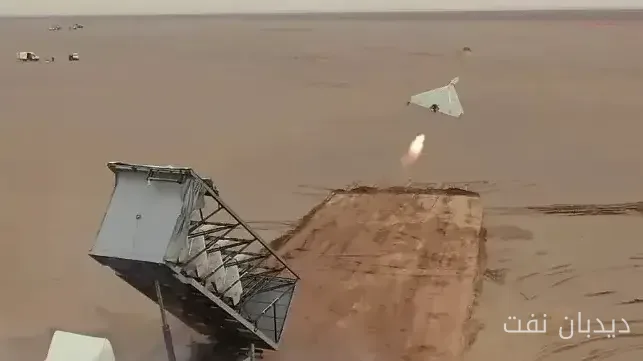
On Sunday, Iran attacked the new LR2 tanker named Lipsi in the Strait of Hormuz. This attack is part of a rapid trend of assaults on "shuttle" maritime trade between Gulf oil producers and the STS transfer area in the Gulf of Oman.
Details of the attacked tanker
According to identifications by Vanguard Tech, the Lipsi tanker is linked to a Greek operator and a Chinese owner, with reports indicating damage to the engine room of this tanker. In the past week, the number of successful attacks by Iran has reached nearly one tanker per day, following weeks of relative security.
Read more: About the return of Premier Alliance maritime services to the Suez Canal
Pressure on tanker traffic
These attacks have created significant pressure on the steady flow of tanker traffic in this waterway, where the volume of Gulf oil exports has returned to over 12 million barrels per day. In fact, this amount has approached pre-war levels.
In the Strait of Hormuz, five tankers have been attacked in four days. Iranian forces targeted the Kuwaiti VLCC tanker KAZIMAH III on October 1, marking the fifth tanker attacked since September 28. None of these tankers were on the PGSA NCV list, and most recent victims have been passing with AIS turned off.
Technical factors and lack of deterrence
Technical factors seem to play a role in the increased rate of attacks. Iran's ability to target ships has improved, allowing the country to continue its attacks with greater freedom. While the United States previously sought to implement a "tit for tat" strategy, attacking tankers linked to Gulf Cooperation Council countries in retaliation for Iranian attacks, it has now refrained from all public retaliatory attacks.
So far, significant traffic of tankers continues in the southern waterway under U.S. protection, and satellite images show that this flow remains steady. Maritime analyst Tom Baik has identified three damaged tankers near the Musandam Peninsula and at least four other tankers that are passing daily through this channel.
Read more: Return of Middle Eastern oil exports to pre-war levels despite sanctions · Sanctioned tanker cargo en route from Iran to China



