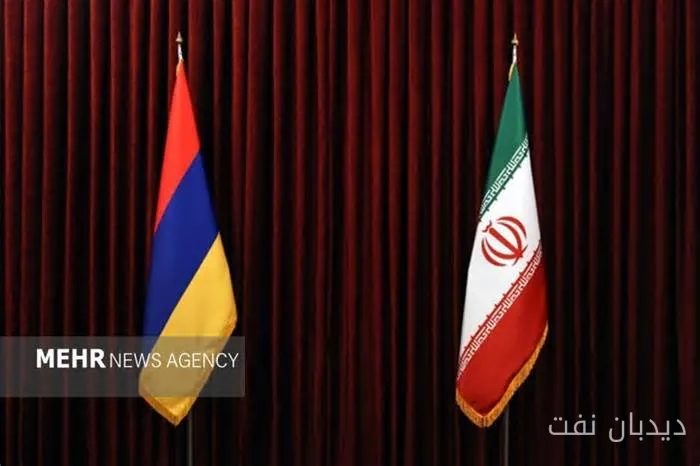
Iran and Armenia's trade entered a new phase in 2026, with official statistics indicating a 7.5% increase in Iran's exports to Armenia. According to data from the Iran Trade Development Organization, exports from Iran to Armenia reached $385 million in the first seven months of this year, and this growth has continued despite regional developments and conflicts.
Trade Statistics and Registration Discrepancies
Official statistics from Armenia also show an increase in trade exchanges with Iran. The value of trade between the two countries in the first seven months of 2026 reached approximately $437.7 million, which is 6.1% higher than the same period last year. During this time, Armenia's imports from Iran were about $394 million, while Armenia's exports to Iran were recorded at approximately $43.7 million. These figures indicate that the main part of bilateral trade still lies in Iran's exports to Armenia.
Read more: The Infrastructure Commission of the Expediency Council Reviewed Energy Supply
However, there is a discrepancy between the $385 million export figure reported by Iran and the $394 million import figure recorded in Armenia's statistics. This difference may arise from variations in registration methods, timing of shipment registrations, and the statistical basis of the two countries, and does not necessarily indicate a discrepancy in the overall trade trend.
Sustainability of Trade Relations and Project Development
Hervik Yariyajian, the head of the Iran-Armenia Joint Chamber of Commerce, described the trade relations between Tehran and Yerevan as stable, emphasizing that regional developments and conflicts have not seriously impacted these relations. Since the collapse of the Soviet Union, Iran and Armenia's trade relations have consistently been on a growth path, and the economic cooperation between the two countries has gradually expanded into broader dimensions.
Yariyajian pointed to a change in the composition of Iran's exports to Armenia, stating that Iran was previously recognized mainly as a goods exporter to the Armenian market, but today, the export of technical and engineering services has also developed alongside goods exports. The presence of Iranian contractors in Armenia's construction projects is also on the rise.
Moreover, Iran's cooperation with the Eurasian Economic Union is recognized as one of the most significant factors influencing the outlook of economic relations between Tehran and Yerevan. Armenia, as a member of this union, can serve as one of Iran's land access routes to the markets of the Eurasian member countries.
The implementation of the free trade agreement between Iran and the Eurasian Economic Union has also created new opportunities for trade development.
In addition, the need to develop customs and transportation infrastructure has been felt due to the increase in trade volume between Iran and Armenia. In this context, a memorandum of understanding for a green customs corridor was signed to facilitate trade between the two countries.
This corridor is designed to reduce the time required for customs procedures, with information regarding goods and transportation vehicles exchanged before the shipment reaches the border between the two countries' customs. Establishing a green customs route can facilitate customs procedures and minimize the time required for customs processes.
The Norduz border, as the only land passage between Iran and Armenia, also holds special significance, and enhancing the capacity of this border has become one of the focal points of economic cooperation between Tehran and Yerevan. The increase in Iran's exports to Armenia and the growth of exchanges on both sides have prioritized the development of this border's capacity.
Given the existing challenges in banking and financial matters, Yariyajian emphasized that the existing mechanisms in international trade do not align with the realities of traders' activities, leading to some financial exchanges occurring outside the banking system. This situation could negatively impact the trade and economic cooperation between the two countries.
Read more: Ahmad Nafisi: The Third Gasoline Quota Will Be Allocated to Hormozgan Fuel Cards · Iran's Standard Has Increased One Level in the International Organization for Standardization