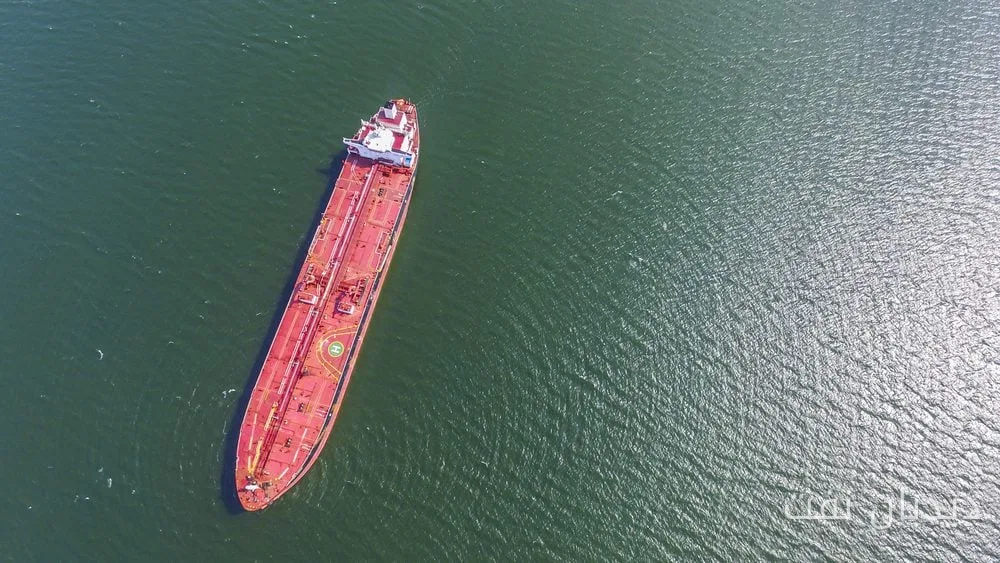
Large tankers are rapidly moving to profit from the high costs of transporting oil through the Strait of Hormuz to the Persian Gulf, which has fueled a global shortage of ships and increased transportation rates.
Oil Flow Situation in the Persian Gulf
Oil flow through the Strait of Hormuz, which connects the Persian Gulf to international markets, has recently returned to levels close to pre-war, despite ongoing attacks on ships. However, the existing risks in the oil trade have significantly increased tanker costs. Transporting oil from the Persian Gulf to East Asia now costs more than six times the pre-war rates.
Read more: Purchase of 12 million barrels of crude oil from Iraq and Qatar by Chinese refineries
According to provided data, over 40% of the global fleet of about 850 large tankers, classified as Very Large Crude Carriers (VLCC), are currently either in the Persian Gulf or within a few days' sailing distance from it. This concentration of ships in the region has been exacerbated by a trade known as "shuttling," where oil is transferred to other ships. These vessels are reluctant to risk passing through the Strait of Hormuz and are being unloaded in the Gulf of Oman or new loading points such as the western coast of India.
Impact on Global Costs and Changes in Tanker Fleet
Analysts say that recent months have been the best time for crude tankers. Greg Stanton, a transportation analyst at Signal Ocean, stated: "The main issue is that the ship-to-ship oil transfer system outside the Strait of Hormuz is inefficient, and this has really restricted the supply of ships there and elsewhere."
The number of empty tankers moving towards Atlantic ports has halved compared to a month ago. The shortage of large tankers has also altered the composition of the oil fleet in other regions, leading to an increase in the number of smaller vessels that do not benefit from the economies of scale enjoyed by larger tankers.
Meanwhile, oil producers outside the Persian Gulf, particularly in the Americas, have maintained a high level of production, even as oil flows from the Persian Gulf have increased. This situation has impacted global oil transportation markets and sharply raised costs.
At least one large tanker (VLCC) has been proposed this week to move from the Gulf of Mexico to Japan at a potential cost of $82 million, or over $40 per barrel. This represents an increase of more than 50% compared to the route just three weeks ago.
On the route from the Persian Gulf to East Asia, which takes about three weeks, tanker rates have reached a historic high of nearly $1.4 million per day. This increase is approximately 540% from pre-war levels, while the increase in Brent oil prices during this time has been around 40%.
The shortage and high costs of large tankers have led to a shift towards smaller Suezmax and Aframax vessels for non-Persian Gulf routes. So far, most contracts for transporting U.S. oil to Asia in November involve these vessels, which in turn raises costs.
Analysts from Fearnleys stated: "The smaller sisters of VLCCs, namely Suezmax and Aframax, are also showing no signs of decline, so there really is nowhere to hide right now."
Read more: The United States sanctioned 22 tankers and several individuals and companies for trading Iranian oil · PIF Energy announced a $2 billion plan to purchase VLCC tankers



