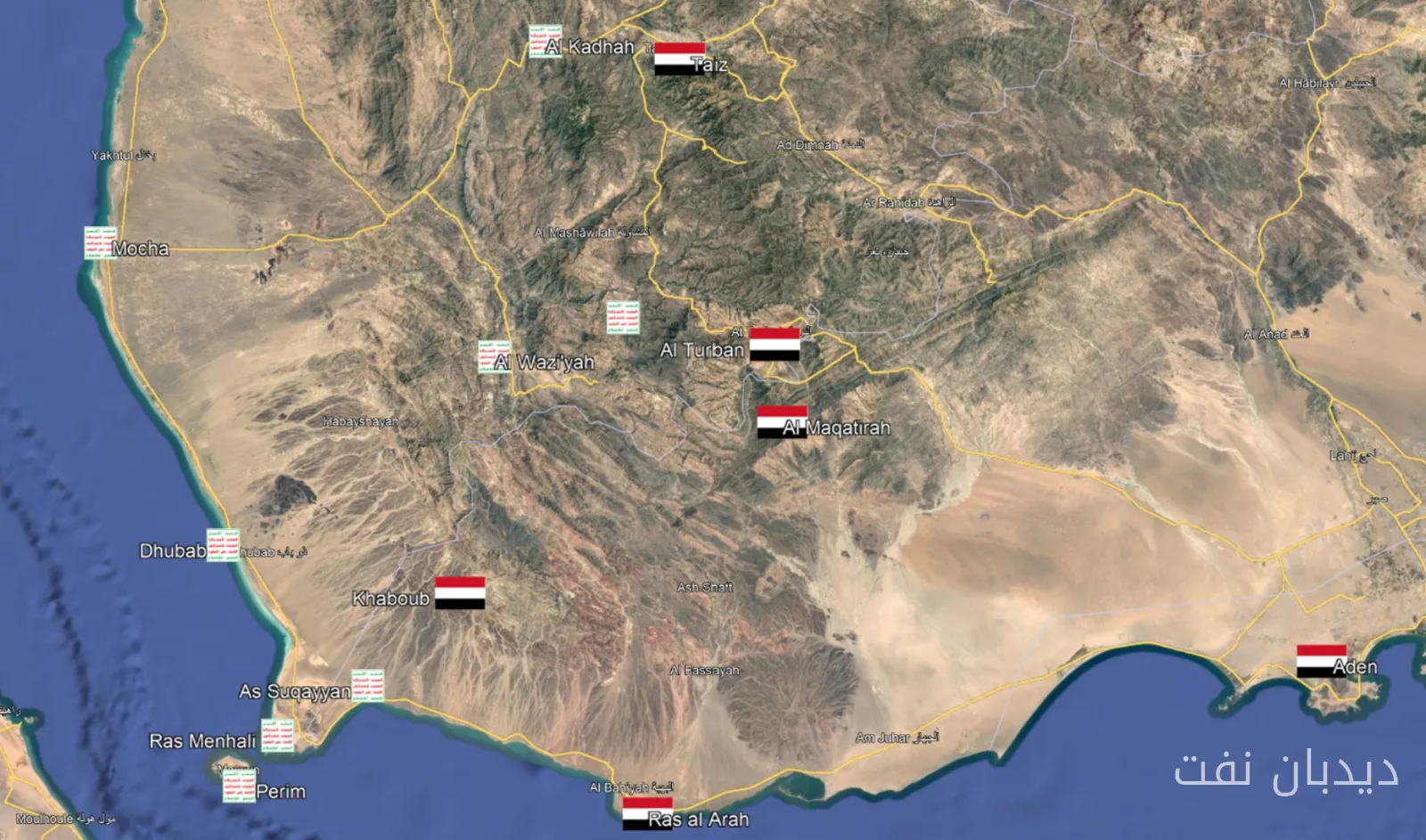
The Houthis have achieved the establishment of new positions in southwestern Yemen after breaking the defensive lines of the internationally recognized government (IRG) in Yemen. By capturing Perim Island and Ras Manahli Peninsula, which overlooks the Bab al-Mandab Strait, the Houthis are strengthening their positions.
Current Status of the Houthis
The Houthis' hold on Ras Manahli Peninsula and Perim Island remains unstable, as these locations require resupply from vulnerable communication lines, and IRG forces still dominate the commanding heights to the east of these areas. However, the Houthis are fortifying their positions by using tunnels and creating defensive positions, which will gradually make their exit more difficult.
Read more: Uncertainty in the IMO Carbon Neutral Framework Threatens 2030 Carbon-Free Fuels
In the newly captured areas, the Houthis are organizing their social and political positions. They have taken steps to establish local administrations, arrest political opponents, impose taxes, and create local police forces. These actions indicate a pre-designed plan to dominate new areas.
Reasons for the Houthis' Military Success
The military success of the Houthis in this move can be attributed to several factors: first, the Houthis' power is based on a specific ideology, the elimination of internal opposition, and unity of purpose. In contrast, IRG forces in this region were divided among three disparate groups operating under the umbrella of the National Resistance Forces led by Tariq Saleh. Tariq Saleh is known as a more active commander compared to others in the IRG military structure, but as the nephew of former President Ali Saleh, he is considered a divisive figure in Yemeni politics.
Former supporters of Tariq Saleh, the Emiratis, were skilled in maintaining a diverse coalition of fighters, but their Saudi successors have not had enough time to establish a cohesive force. This situation allowed the Houthis to exploit the status quo. After initial successful resistance, IRG forces quickly collapsed, and in their rapid retreat, they abandoned large quantities of advanced weapons and ammunition that are now in the hands of the Houthis.
Although maritime traffic from the Bab al-Mandab Strait appears to continue and has even increased compared to previous dates, this situation should be regarded as a temporary illusion. The Houthis are deliberately avoiding creating tensions with the United States and other countries to stabilize their position. Currently, the Houthis are focusing on besieging Taiz and capturing more areas in Marib with oil fields.
With 70 percent of Yemen's population but only 30 percent of its land and without access to oil resources, the Houthis are trying to expand their influence. This effort comes while their enemies remain in a divided and unstable situation. If the Houthis do not take serious actions, the maritime community can expect that navigation in the southern Red Sea will increasingly become problematic.
Read more: Trends in the Shipping Market Affected by Geopolitical Crises · Attacks on Saudi Oil Lines and Houthi Threats: Iran's Victory in the War