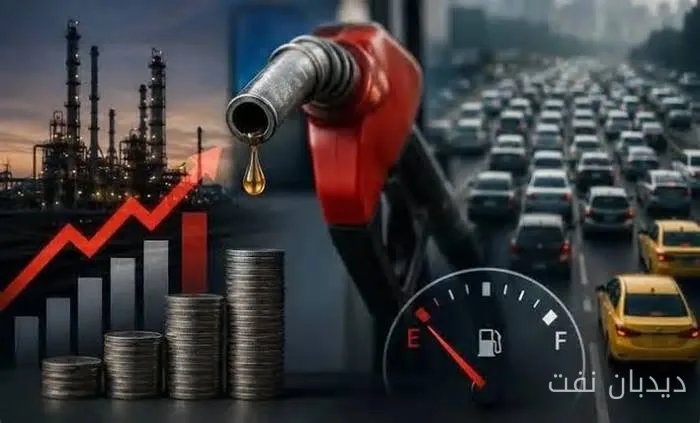
Hashim Orayi stated in his evaluation of the gasoline price change and fuel imbalance: The latest statistics released before this price increase indicated that our refineries produce about 112 million liters per day, and considering other sources including reformate production from petrochemicals, the supply is around 122 to 132 million liters per day, while we had a shortfall of about 14 million liters per day.
The limited impact of the gasoline price increase
Orayi added: This situation is while the government, after much discussion and back-and-forth, finally announced that the first and second gasoline quotas and rates would remain unchanged, and the third quota, which includes about 15% of gasoline, would see its price increase from 5,000 tomans to 10,000 tomans. The professor at Sharif University of Technology emphasized: This action is by no means a solution to the problem. One cannot really expect that with a 15% increase in gasoline prices from 5,000 tomans to 10,000 tomans, especially when the prices of other goods and services have risen, anything significant will happen. It feels as if we have done nothing.
Read more: The CEO of Tavanir announced a 3% reduction in electricity consumption in summer
Challenges in managing gasoline consumption
He said: Therefore, with this approach, we will not reach anywhere. Because at the same time that the price of the third quota has risen from 5,000 tomans to 10,000 tomans, with the existing inflation, this price increase has become ineffective. Orayi stated that there are currently two viewpoints regarding the management of gasoline consumption in the government: The discussions in the government can currently be divided into two groups. One group follows the same viewpoint that was raised before the recent increase in gasoline prices; that is, to distribute all gasoline among the people, with each individual's share determined by their national ID, allowing individuals to sell their shares to each other, while the second group simply wants to focus on increasing prices.
Regarding whether the current rate increase will allow for controlling smuggling, he explained: If the price difference between inside and outside the country is very large, smuggling remains justified, so whether we buy gasoline at 5,000 tomans or 10,000 tomans does not make much difference. Thus, merely raising the gasoline price from 5,000 tomans to 10,000 tomans cannot fundamentally solve the smuggling problem.
Read more: Nasrollah Pezhmanfar: Issuing a pre-approval certificate for operators in gas consumption management · Kerman police: 3,000 vehicles related to fuel smuggling were seized