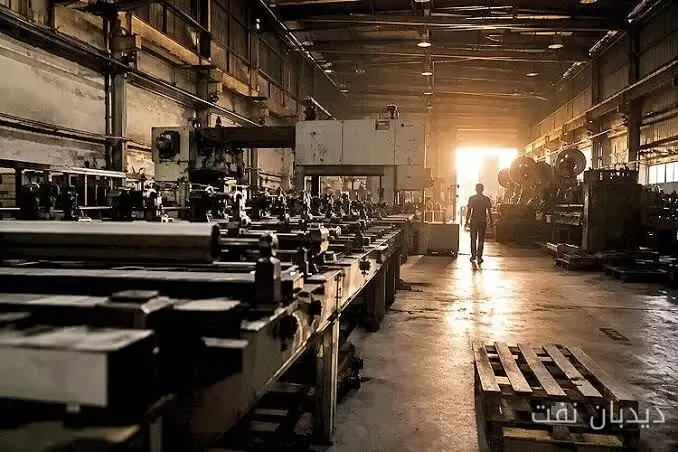
Simultaneous electricity and gas restrictions have become a widespread challenge for manufacturing businesses, and their effects extend from production line stoppages and increased costs to disruptions in raw material supply and reduced competitiveness of industries. In conditions where production relies on continuous and predictable access to energy, electricity and gas restrictions can disrupt businesses' planning and impose unforeseen costs on them.
Consequences of Power Outages on Production
Power outages, especially in units that cannot store or quickly compensate for lost production, go beyond temporary activity stoppages. Disruptions in production scheduling, increased costs, delays in order deliveries, and reduced productivity are part of the consequences of this situation. Additionally, gas restrictions in industries dependent on thermal processes and continuous equipment can cause even greater damages, as stopping and restarting some equipment is time-consuming and costly.
Read more: Increase in crude oil prices to $109 and Europe's concerns in winter
Impact of Energy Imbalance on Small and Medium Enterprises
Keyvan Kashafi, an expert and active figure in the industry sector, explained the effects of electricity restrictions on manufacturing units, noting: "Power outages caused by energy imbalance have become one of the ongoing challenges in the production sector; a challenge whose effects have recently extended beyond large, energy-intensive units and involved a broader range of economic enterprises." He added: "The expansion of outages to small and medium units is significant because these businesses typically face greater limitations regarding liquidity, working capital, and compensating for unforeseen costs."
Kashafi continued: "Production stoppage does not merely mean losing a few hours of activity; it can impose a range of direct and indirect costs on the business. When an industrial unit cannot operate according to the pre-determined schedule, production timing, order deliveries, and customer needs are also affected. On the other hand, part of the fixed costs of the business remains even during production stoppages, and a decrease in production can increase the cost per unit of product."
The continuation of this situation can weaken businesses' ability to compete in domestic and foreign markets. Therefore, sustainable energy supply and predictable management of restrictions are essential for maintaining production and preventing the expansion of damages in the industrial chain.
Read more: The head of the Iran Trade Development Organization announced the realization of $52 billion in non-oil exports · Major repairs at the Parsian refinery for sustainable gas supply in winter