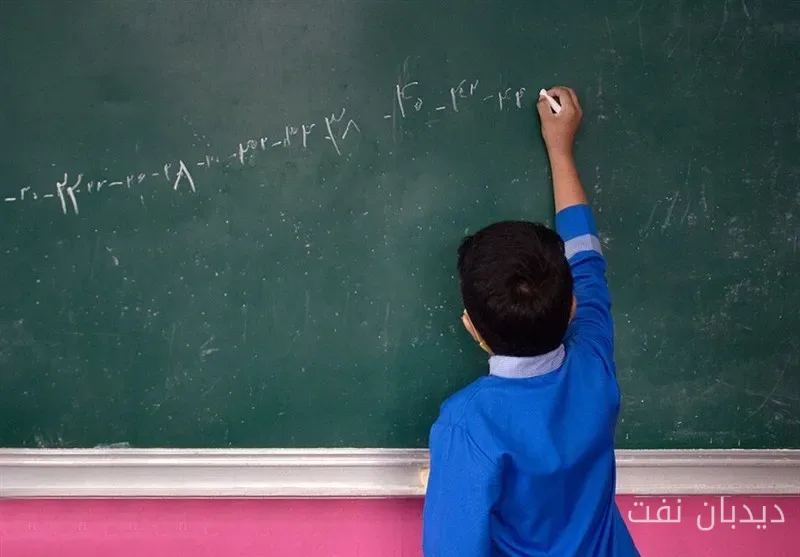
Ali Farahadi, the spokesperson for the Ministry of Education, in his latest statements regarding the state of education in the country, announced that classes will continue in person and there is no shortage of energy carriers. In response to concerns about the possibility of schools transitioning to virtual learning, he emphasized that the conditions of each region will be examined separately.
Current Status of In-Person Education in the Country
Farahadi pointed out the current status of school activities in the country, stating that there is currently no acute problem regarding school operations, and only in some areas of Hormozgan province is education being conducted virtually. Other schools across the country continue to operate in person.
Read more: Masoud Pezeshkian Emphasized His Commitment to the People of Iran
The spokesperson for the Ministry of Education further explained that decisions regarding education in schools must be made according to the conditions of each province and region. According to him, if a decision is made in one province to change the method of education, there is no obligation for this decision to be applied to other provinces as well.
New School Reopening Model
Farahadi explained the new school reopening model that had previously been proposed by the Minister of Education, stating that this model is primarily designed for internal coordination within the education system. In this model, in areas facing security threats, the possibility of using a hybrid education model and the capacity of safe spaces for maintaining in-person communication between students and teachers will be examined.
He emphasized the importance of in-person education, noting that schooling is not limited to learning textbooks, and a significant part of this difference relates to the educational role of schools and teaching life skills to students. Farahadi stated that waking up on time in the morning, performing ablution and praying, having breakfast, and organizing clothes are all part of the process of education and learning life skills.
Ultimately, Farahadi stated that from the ministry's perspective, in-person education is the main priority, emphasizing that if for any reason we have to pursue education non-in-person, this method would be better than completely closing schools. He expressed hope that conditions would progress in such a way that there would be no need for schools to transition to non-in-person education and that students' education would continue in the school environment.
Read more: Trump Administration Accused Zelensky of Obstructing the End of the Ukraine War · Developing Environmental Capabilities in the Maritime Industry with a Focus on Education



