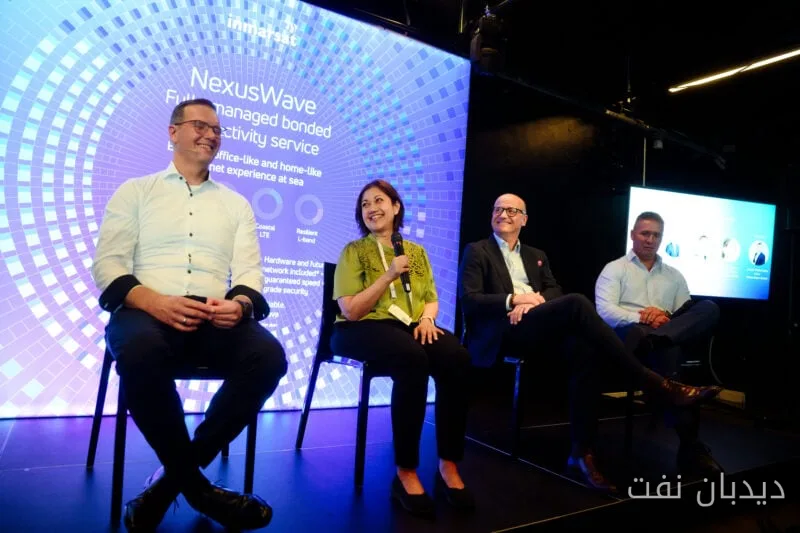
Digital transformation in the maritime industry has increasingly gained attention. At the recent Inmarsat Maritime seminar titled 'Connected to Perform' in Hamburg, industry experts highlighted the importance of optimizing the use of existing technologies and the challenges associated with it. This meeting took place alongside the SMM Hamburg exhibition and aimed to explore how to digitize maritime operations to enhance safety and efficiency.
Technologies and Challenges
Experts present on this panel emphasized that the technology necessary for digitizing maritime operations is currently available, but many organizations have yet to fully realize its potential. Adra Drabless, Strategy Director at Inmarsat Maritime, believes that although advanced technologies such as advanced analytics and predictive maintenance are available, the main challenge lies in how to utilize these technologies and transform organizational decision-making processes.
Read more: CMB.TECH sent the tanker Mineral Europa to sea with ammonia fuel
Data Management and Inter-Agency Collaboration
Patrick Brist, Chief Operations Officer of IT Products at Hapag-Lloyd, referred to the use of real-time cargo tracking and trip optimization as examples of digitization. Additionally, Matthias Beck, CEO of Anglo-Eastern Germany, mentioned the application of artificial intelligence for managing ship emissions. However, representatives from these organizations emphasized the need for inter-agency collaboration and integration of various systems to achieve greater efficiencies.
In this regard, Drabless and other experts emphasized that the maritime workforce requires proper training to utilize connected systems. Meanwhile, collaboration among staff, maritime personnel, and the IT sector is essential to address the challenges of digitization.
According to Beck, achieving this goal cannot solely rely on training; inter-agency and international collaborations must also be considered. He stressed that maritime personnel should have access to the right tools to perform their tasks effectively.
The Role of Cybersecurity and the Digital Future
During this seminar, the discussion also touched on cybersecurity and the need to protect digital systems. Drabless emphasized that security must be considered a principle in implementing communications. This approach becomes even more critical as the demand for sustainable and secure communications increases.
Gert-Jan Panken, CEO of Inmarsat Maritime, in his speech, referred to the cybersecurity validation of NexusWave by ClassNK and Bureau Veritas and stressed the importance of aligning this solution with customer requirements. This validation from an independent source indicates that NexusWave adheres to international standards and can help improve security in the maritime industry.
Ultimately, the experts present at this seminar emphasized that the future of the maritime industry depends on digital transformation and the optimal use of new technologies, and organizations must respond quickly to this trend.
Read more: SLB and TotalEnergies signed a 15-year agreement for digital planning · Increase of 250,000 barrels in oil production and preservation of 700 million cubic meters of gas from South Pars