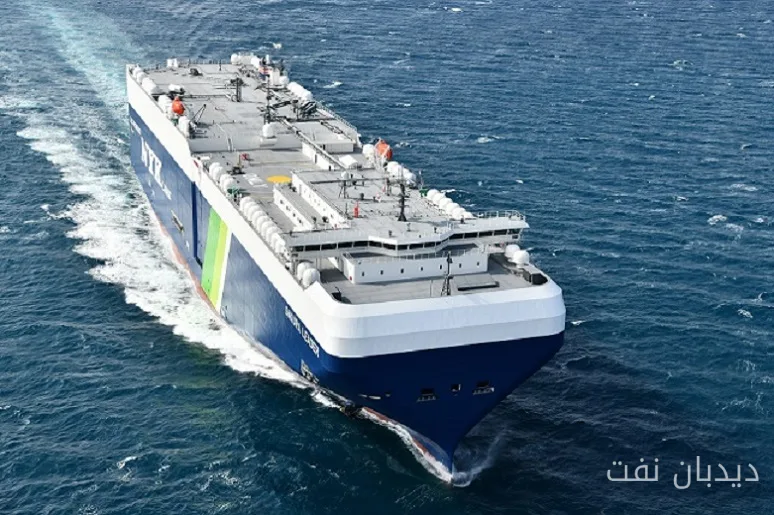
A group of seven companies in Japan has collaborated to develop the first integrated system for using ammonia as marine fuel. This system includes the development and supply of green ammonia, fuel sales, fuel supply, and operations of ammonia-fueled car carriers.
Integrated Business Model
These companies believe that this project will be the first integrated commercial supply chain with applications for ammonia fuel. They announced that this effort will promote carbon reduction and also lead to broader use of ammonia in industries and other applications.
Read more: Fagro signed a contract to review unexploded ordnance along the route of submarine cables
By combining technologies, expertise, and relevant infrastructure, these seven companies will create an advanced and integrated business model that includes the supply and provision of ammonia fuel, construction of ammonia-fueled car carriers, and development of an ammonia fuel supply vessel.
Green Ammonia Production and New Vessels
To create demand and support the development of this complete system, NYK and Kawasaki Kisen Kaisha (K Line) have agreed to build four car carriers with ammonia dual-fuel engines. Each company will introduce two vessels scheduled for completion in 2030. Imabari Shipbuilding, Shin Kurushima Dockyard Co, and Nihon Shipyard Co will be responsible for the design and construction of these four vessels.
This supply chain begins with the production of green ammonia in an effort led by JERA. This industrial company is currently making progress in developing a low-carbon ammonia value chain, including initiatives for using low-carbon ammonia in the Hekinan thermal power plant and the loading and unloading systems for tankers. JERA is set to produce green ammonia using renewable energy from various regions, including India.
The fuel supply vessel will also be designed and built by Kyokuyo Shipyard and is scheduled for completion in 2030, under the ownership and management of NYK. This specialized and dedicated vessel will be designed with advanced systems to prevent leaks and will also include equipment to handle the toxicity and corrosion of ammonia. Additionally, this vessel will be designed to support ship-to-ship (STS) fuel supply.
Read more: Kian Bastani Nejad: Navigation without GPS is essential · China is approaching the commercialization of the green maritime transport corridor