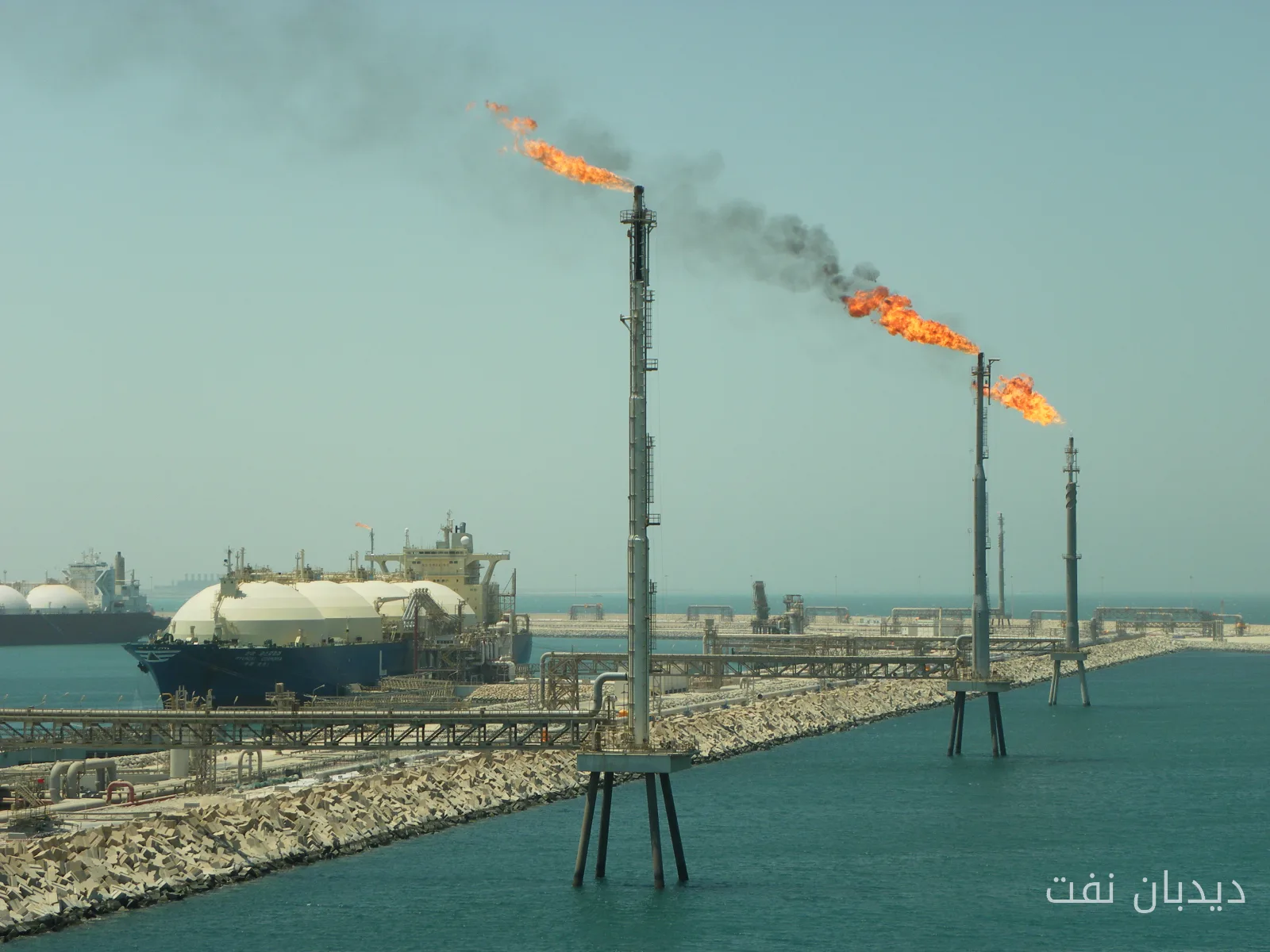
The decrease in LNG prices in the global market is particularly notable given the challenges faced by tanker traffic in the Strait of Hormuz due to sanctions and rising tensions. LNG prices have recently fallen to their lowest level since 2026, while there is no agreement for a return to normalcy in the Strait of Hormuz.
Change in Tanker Routes and Its Effects on the Market
Due to the non-use of AIS devices by ships and the maintenance of operational security, obtaining accurate information about traffic in the Strait of Hormuz is difficult. However, estimates indicate that the volume of LNG transported through this strait has reached about 20 percent of pre-war levels. Shuttle tankers continue their operations to transfer LNG from ship to ship as soon as they exit high-risk areas. LNG tankers loaded from the United Arab Emirates are heading towards the shores of Oman.
Read more: Kuwaiti tanker Al-Funtas targeted in the Strait of Hormuz
Factors Influencing Price Decrease
Despite the decrease in the volume of LNG transported through the Strait of Hormuz, this shortfall is compensated by reduced demand due to rising prices and increased production in Canada, the United States, and Malaysia. LNG reserves in India have reached near full capacity, and some inventories are also being sold. While the global diesel shortage has been widely publicized and reflected in high pump prices in the United States, the shortage is not felt in every product category. LNG prices have decreased, and crude oil prices are stabilizing after disruptions caused by Houthi attacks on the Saudi pipeline. Reports indicate that 10 million barrels of oil were loaded from Yanbu on September 28, and the average loading of Saudi crude oil last week reached 8.5 million barrels per day.
Despite rising prices during the crisis, it seems that prices have not reached the level analysts expected. This indicates that supply and demand mechanisms have been able to respond well to system shocks. The maritime community has also shown that it has quickly shifted from previous trade routes to other options and is charging high prices for this.
There are two specific issues that require immediate attention: the shortage of alternative strategic trade routes and the identification of chokepoints that emergency plans must be prepared against, and the failure of some countries to maintain sufficient reserves and domestic production of essential petrochemical products such as diesel and jet fuel.
In this situation, there is always a possibility of an incident or event to escalate tensions, and Iran may carry out more attacks on passing ships to escape the effects of the blockade. However, overall, data indicates that the situation is somewhat under control and the crisis is being managed.
Read more: Seven Islands Shipping purchased a new tanker shipment worth $15.5 million



