The Fourteenth Government has adopted the revival of compressed natural gas (CNG) consumption as the main solution to reduce gasoline imbalance by changing its management approach. Studies show that daily CNG consumption reached about 24 million cubic meters in the years 2020 and 2021, but due to price stabilization and a decrease in the price gap between gasoline and CNG, this figure has decreased to 15 to 16 million cubic meters per day.
Investment in CNG Infrastructure and Growth of Vehicle Conversions
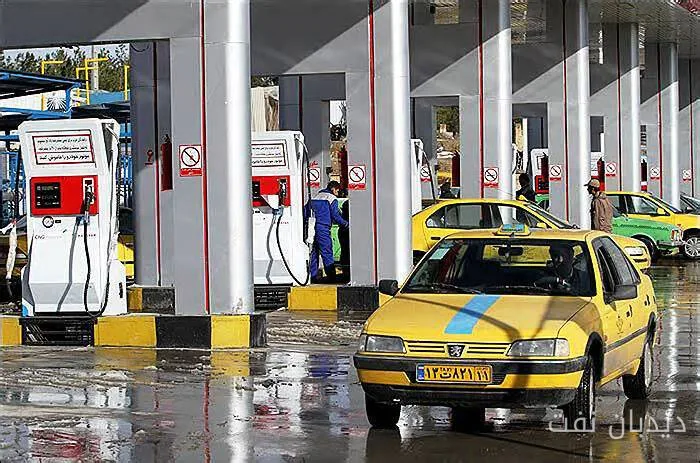
In the Fourteenth Government, the revival of this strategic capacity has been prioritized, resulting in a 64 percent increase in the conversion of vehicles to dual-fuel fleets. Currently, about 4 million and 300 thousand vehicles have been factory-made or workshop-converted to dual-fuel. Additionally, there is one CNG station for every 1,600 vehicles in the country, indicating a relatively good status in access to infrastructure.
Read more: 30 percent of bakeries in North Khorasan have been equipped with dual-fuel systems
Results of Non-Price Policies and Increased CNG Consumption
Non-price policies and smart distribution, especially in Kerman and Sistan and Baluchestan provinces, have led to a 30 percent increase in CNG consumption. By eliminating emergency cards at stations and transferring quotas to citizens' personal cards, gasoline consumption has decreased by 15 percent. This successful experience shows that directing high-consumption fleets towards clean and accessible fuel is an effective solution for reducing gasoline imbalance and strengthening the foundations of the national economy.
The government has also implemented a targeted plan for the free conversion of high-consumption fleets in collaboration with the Ministry of Interior and internet transportation platforms. This plan has been activated in its first phase in three provinces: Tehran, Kerman, and Sistan and Baluchestan, and will soon be extended to other provinces. The goal of this plan is to reduce drivers' operating costs and improve their income.
In line with sustainability in consumption, the government has resolved the financial obstacles of the CNG industry by paying over 2,400 billion tomans of accumulated claims and has assisted in the production of 90,000 dual-fuel vehicles over the past two years. Recently, 9 CNG supply stations have been launched in five provinces with an investment of over 1,000 billion tomans.
These 9 stations, functioning like 9 small refineries, will lead to an annual savings of 118 million liters of gasoline in the first year. This action is considered one of the tangible steps in improving the national energy balance.
The development horizon for CNG infrastructure is not limited, and with the call for the development of electric vehicle charging infrastructure, about 250 technical requests have been registered. These requests will be equipped with electric vehicle charging stations by the end of this year.
Currently, CNG is seen as a ready and low-cost capacity to reduce pressure on gasoline consumption and fuel supply costs, dependent on effective policymaking in pricing and vehicle production.
Read more: Hojjatoleslam Mohammad Mokhtari: Economic problems stem from external pressures and mismanagement · Ahmad Midari: The Fourteenth Government seeks to change the rules of policymaking in the energy sector