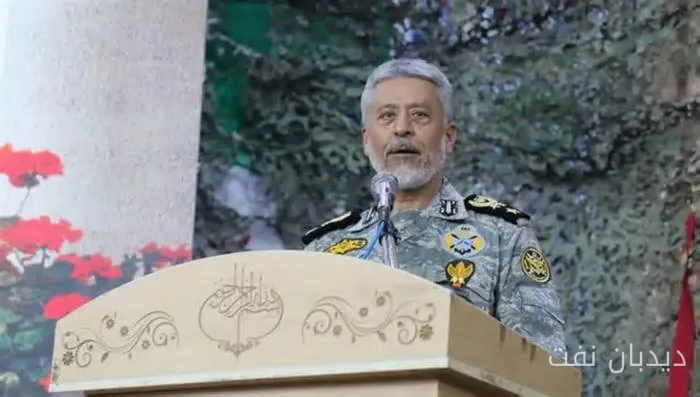
Admiral Habibollah Sayyari, Chief of Staff and Deputy Coordinator of the Army, announced that the Strait of Hormuz and the Persian Gulf are under the complete control of the Navy of the Islamic Revolutionary Guard Corps, and the Navy of the Army also has control over the eastern Strait of Hormuz and the northern Indian Ocean. He emphasized the high readiness of the forces to confront any threats, stating that no one will be allowed to pass through this area.
Control and Readiness of the Forces
Admiral Sayyari stated: "We act decisively in the northern Sea of Oman and the eastern Strait of Hormuz, and we will not allow anyone to pass. The Strait of Hormuz is under our complete control." These remarks reflect the defensive and military strategy of the Islamic Republic of Iran in protecting its maritime borders.
Read more: Hunterberg appointed Erik Matissen as permanent CEO
Lessons Learned from War and Strengthening Capabilities
He also referred to the lessons learned from the war and emphasized their importance in enhancing military capabilities. Admiral Sayyari said: "Army personnel recognize the lessons learned from the war and today stand much more prepared than before against threats." This clearly indicates the continuous efforts of the army to strengthen its capabilities and prepare against potential threats.
According to him, the Army of the Islamic Republic of Iran, by identifying its weaknesses and strengths, has been able to be much more prepared than in the past against threats. This readiness, especially in the current conditions where regional tensions have increased, is of special importance.
Consequences of Control over the Strait of Hormuz
Iran's control over the Strait of Hormuz, which is considered one of the most important and strategic maritime routes in the world, can have significant impacts on global energy security. This area, as one of the most vital passages for oil and gas in the world, can significantly affect global energy prices in the event of any tensions.
As a result, emphasizing the control and readiness of military forces can be perceived as a signal to the international community that Iran is seriously committed to protecting its interests in this region and will not tolerate any aggression.
Read more: Omid Shakri: Providing feedstock for petrochemicals will be more difficult in winter · Change in the balance of power in the Strait of Hormuz in favor of Iran



