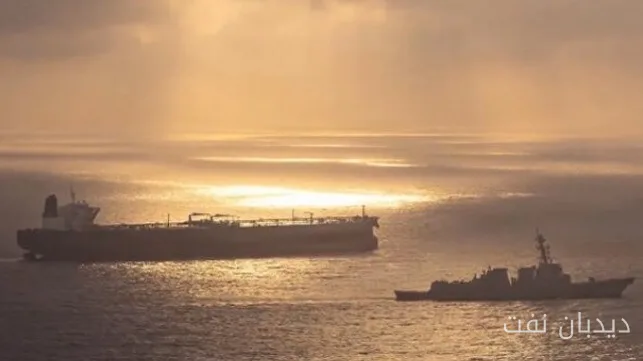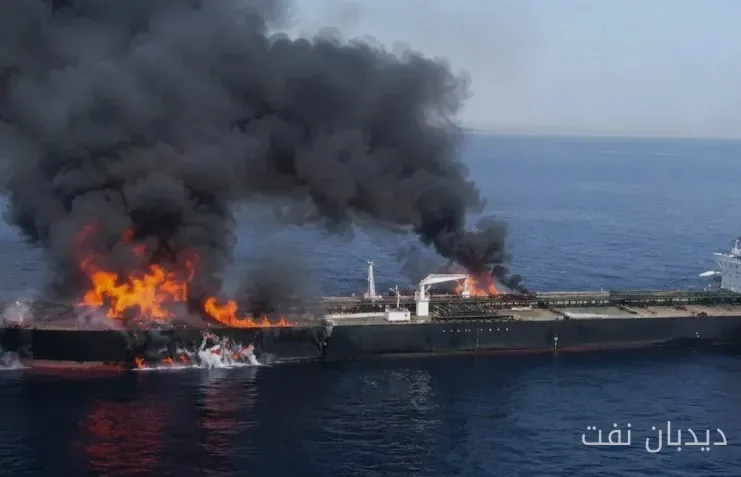
Iran has managed and controlled this strategic waterway by deploying smart naval mines in the Strait of Hormuz. Recent movements indicate a shift in Iran's military approach towards violating vessels.
Shift in Iran's Military Approach
Recent movements in the southern waters indicate a major tactical change in dealing with violating vessels. The Revolutionary Guard has officially announced that disabling navigation and identification systems (AIS) by any vessel in this area will be considered a hostile act and will receive a decisive response.
Read more: Trump announced an energy agreement between Russia and Ukraine
Smart Naval Mines and Destruction of Alternative Routes
In this complex campaign, the activation of smart naval mine networks against giant vessels is underway. The third super tanker colliding with a naval mine and the fire on a liquefied gas carrier contain precise operational messages. The weapons used in this area are advanced mines that are deployed on the seabed and equipped with combined acoustic, magnetic, and pressure sensors. These sensors activate the detonator as soon as they match the signature of the target vessel.
These actions demonstrate the destruction of recent Western plans to utilize alternative routes. The Western coalition, by investing in pipelines and Omani and southern axes, believed it could bypass the Strait of Hormuz, but smart mining has shown that Iran's operational radius and deterrence extend beyond the mouth of the Hormuz.
The Strait of Hormuz has never been an international waterway, and all of its territory is under the national sovereignty of Iran. This fact affirms the inherent and legitimate right of the Islamic Republic of Iran to enforce laws and inspect vessels.
Alongside military components, the role of the Strait of Hormuz in the energy market remains one of the main pillars of Iran's power. Despite U.S. efforts to neutralize this lever, Iran's decisive management has proven that disruption of the safe passage of 20% of the world's crude oil consumption quickly inflames global markets.
Overall, the Strait of Hormuz, under the oversight of Iran's armed forces, is considered a vital and strategic artery in military and economic arenas.
Read more: Kazem Gharibabadi: The Strait of Hormuz is a red line for Iran's national security · Qatar's revenues decreased by 42% due to disruption in gas exports