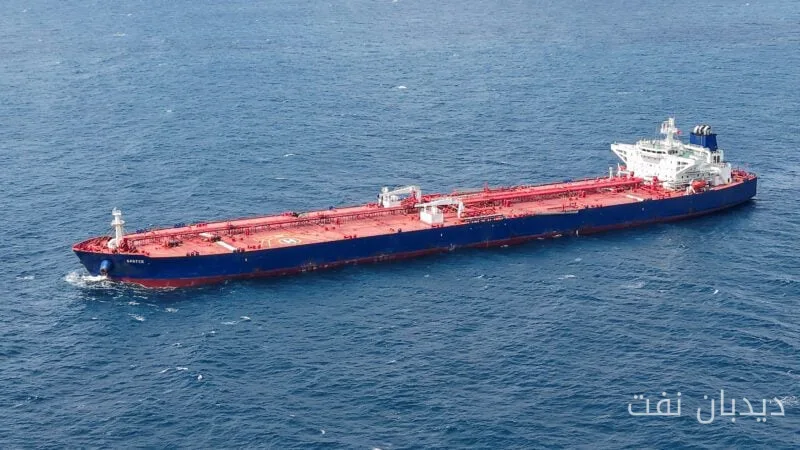
Britain has sanctioned 12 tankers identified as part of Russia's shadow fleet. These sanctions include the 22-year-old tanker "Dakar," which is currently undertaking an unusual voyage in the final season on its route through the North Sea.
Details of the Sanctions and Shadow Fleet
These vessels were part of 38 new sanctions announced by the UK Foreign, Commonwealth & Development Office. Of the 12 sanctioned tankers, 9 are chemical carriers and 3 are oil tankers. All of these vessels were identified on October 8 and are subject to UK maritime and trade sanctions.
Read more: Rockhopper Allocates $44 Million for Oil Project in the Falkland Islands
The sanctioned vessels include "Blaris," "Dakar," "Daphne V," "Flint Win," "Alexander Nevsky," "Anaya," "Andrei Provozhani," "Modulga-3," "Pioneer," "Vasily Surikov," "Virent," and "Yohpe." The UK Foreign Office stated that the reason for sanctioning these vessels is their transportation of oil or petroleum products of Russian origin to third countries.
Impacts and Consequences of the Sanctions
With the new sanctions, the number of tankers in the shadow fleet sanctioned by Britain has risen to over 600 vessels. The UK government has stated that the message of these sanctions is clear: "Anyone who assists Russia in financing or equipping this war will face the consequences."
The tanker "Dakar" is currently en route to Asia through the North Sea, carrying "methyl tert-butyl ether," a gasoline additive. This vessel has an ice class of 1B and appears to be undertaking unusual voyages towards Asian markets.
According to new analyses, the number of sanctioned vessels and shadow fleet vessels using the North Sea route has significantly increased over the summer. The environmental transparency center "Belona" has identified 50 shadow fleet tankers and 18 LNG vessels on this route, surpassing the total of 38 tankers and 13 LNG vessels for the entire 2025 season.
More than three-quarters of the tankers identified by Belona during this period were under sanctions, and 26 of the 50 tankers had an ice class of 3 or lower or no ice class at all. This data indicates the increasing role of sanctioned and older vessels in the logistics of Arctic energy in Russia.
It seems that shadow fleet tankers are increasingly using the North Sea route to transport Russian oil and petroleum products to Asian markets.
Read more: Valaris Signs New Drilling Contracts in the North Sea, Australia, and Suriname · Marco Rubio: Iran Has Lost Full Control Over the Strait of Hormuz



