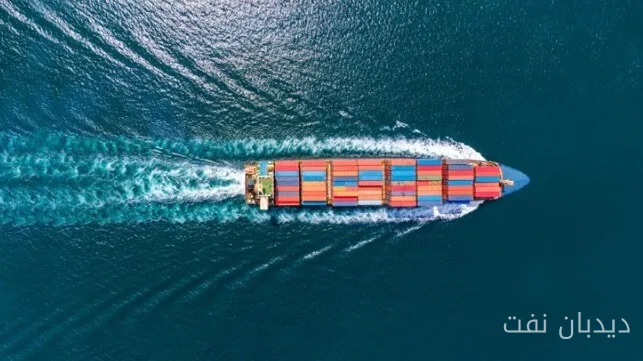
A new analysis of the container shipping market by BIMCO (the International Shipping and Transport Association) shows that supply pressure in this market is increasing despite disruptions in the Strait of Hormuz. This study forecasts the impact of container ships returning to the Suez Canal - Red Sea route and examines the challenges in this sector.
Growth in Container Volume and Supply-Demand Balance
According to BIMCO's calculations, global container volume in the first seven months of 2026 has increased by 5.1% compared to last year. This strong growth in transactions outside the Persian Gulf has offset the negative impact of reduced trade volume with South and West Asia. Additionally, exports from East and Southeast Asia account for more than half of the recorded growth.
Read more: The U.S. Government Calls for Complete Economic Isolation of Iran
BIMCO notes that strong growth in transactions outside the Persian Gulf has so far maintained the supply-demand balance. The absence of certain ships has also contributed to reduced capacity, while ships have diverted to the Cape of Good Hope route to avoid potential risks in the Red Sea.
Timing Challenges and Impact of Storms
Another challenge in this sector is the significant reduction in scheduling capability among container shipping companies, which dropped to 29% in August. This situation has led to delays on the Far East - Europe route and negatively impacted trade and future contract negotiations.
Furthermore, the residual effects of consecutive storms have resulted in a backlog of 1.1 million TEU of cargo at the ports of Ningbo, Shanghai, and Yantian. These issues have added to the complexities in trade and highlighted the need for improvements in scheduling.
BIMCO also points out the decrease in the average speed of ships and predicts that this trend will continue into 2027. With the resolution of some challenges and the return of shipping companies like CMA CGM, Maersk, Hapag-Lloyd, and MSC to the Suez Canal - Red Sea route, it is expected that more capacity will be freed up.
In conclusion, BIMCO estimates that if the normalization trend continues, the growth in ship demand may be five percent lower than forecasts. Meanwhile, after full normalization of the routes, the demand for ships could be 10 percent lower than if the Cape of Good Hope route remains prioritized.
Read more: Pakistani Analyst: The Persian Gulf Should Be a Safe Energy Transit Route · Nikzad: We Will Not Back Down from the Strait of Hormuz, and the U.S. Must Solve the Energy Problem